B2B Brand Strategy Examples: What Moves a Procurement Decision
A B2B brand strategy built on how business buyers decide, what builds credibility with technical buyers, and the documents where the strategy shows up.

Summarize with AI
Key takeaways
- Only a small share of potential buyers are in the market at any time. A B2B brand strategy that only targets active buyers misses most of the future market.
- Buying groups, not individuals, decide. Write the strategy for the group, including procurement.
- Buyers prefer to research without a sales rep and increasingly use AI to do it. Your website, documents and reps must say the same thing.
- B2B buyers feel personal risk. A brand that makes the champion look smart and safe outweighs a longer feature list.
- Technical buyers judge credibility on evidence: documentation, security information, specific claims and peer proof, all telling the same story.
- Few buyers will pay for the differences they see between suppliers. Specificity is the cheapest differentiator available.
- Brand strategy is a written set of decisions (positioning, messages, proof, voice) before it is a logo.
A B2B brand strategy works when it is built around how business buyers actually decide, which is not how most B2B marketing assumes. At any moment, most potential buyers are not in the market, so the brand’s first job is to be remembered when they are. When they do buy, a group decides, with procurement involved from the start, and most of the research happens without your sales team, increasingly with AI. The people in that group carry personal risk, and research shows personal value moves them roughly twice as much as business value. So a B2B brand strategy has to do five things: be easy to remember, give every member of the buying group a reason, say the same thing everywhere buyers look, make choosing you feel safe, and be specific enough to be different.
I’m Masuder Rahaman, a brand designer and the founder of Wolfpixel, where I lead the design team. I write brand strategies and design identities for B2B companies, from HR software and cybersecurity to fintech, logistics and construction, for clients in the US, the UK and the Gulf. This article sets out what research says about how business buyers decide, and what a B2B brand strategy should do about each finding.
How do B2B buyers actually decide?
Five research findings shape a B2B brand strategy: most buyers are not in the market yet, groups decide, research happens without you, buyers carry personal risk, and few will pay for differences they see.
1. Most of your future buyers are not buying today
In 2021 research with the LinkedIn B2B Institute, Professor John Dawes of the Ehrenberg-Bass Institute set out the reasoning behind what is now called the 95:5 rule. Companies change many kinds of supplier only every few years: if a company replaces a supplier about once every five years, only about 20% of the market is shopping in any year, and something like 5% in a quarter. The other 95% will buy later. Dawes is clear that the 95% is not meant to be a precise rule, and the right number varies by category. But the direction holds almost everywhere: you have far more future buyers than current ones. As the B2B Institute’s Peter Weinberg and Jon Lombardo put it in Marketing Week, marketers don’t move buyers into the market; buyers move themselves.
What the strategy must do: be remembered by the 95% so you are on the shortlist when they become the 5%. Ehrenberg-Bass calls this mental availability. In practice it means a brand that is distinctive enough to recognize, consistent enough to accumulate, and clearly linked to the buying situations in which a buyer will think of you.
2. A group decides, and procurement is in the room early
B2B purchases are made by groups. Gartner’s 2025 survey of B2B buyers found buying groups ranging from five to 16 people across as many as four functions. Forrester’s State of Business Buying 2026 says the typical buying decision now includes 13 internal stakeholders and nine external influencers, and that procurement professionals are decision-makers in 53% of business buying cycles, engaging from the start of the process rather than only at the end.
What the strategy must do: give every member of the group a reason. The user wants the product to work, the finance lead wants the cost to be defensible, IT or security wants the risk to be low, procurement wants the vendor to be stable and the process clean, and the executive sponsor wants an outcome they can report. A brand strategy written for one persona leaves the rest of the group to make up their own story about you.
3. Buyers research without you, and notice when you contradict yourself
In a Gartner survey published in March 2026, 67% of B2B buyers said they prefer a rep-free buying experience, and 45% said they had used AI during a recent purchase. In an earlier Gartner survey of 632 B2B buyers, published in June 2025, 69% reported inconsistencies between the information on a company’s website and what its sellers told them.
What the strategy must do: say the same thing everywhere a buyer, or an AI tool acting for one, will look. The website, the product pages, the documentation, the case studies, the LinkedIn page, the sales deck and the reps all need to describe the company, the product and its claims in the same words. When an AI assistant summarizes your company for a buyer, it can only be as consistent as your own sources. For the design side of staying consistent across those screens, see digital branding.
4. Business buyers carry personal risk
A widely cited 2013 study by CEB (now part of Gartner), with Google and the research firm Motista, surveyed 3,000 buyers of 36 B2B brands across seven categories. It found that personal value (professional advancement, confidence, reduced risk, pride) had roughly twice the impact of business value on commercial outcomes, including consideration, purchase, willingness to pay a premium and advocacy, and that business buyers perceive real risk in advocating for any one supplier. The study is more than a decade old, but its central finding matches what anyone who has sold to an enterprise has seen: the person championing you is putting their own reputation on the line.
What the strategy must do: make choosing you feel safe and make the champion look good. That means proof the champion can forward (named customers, references, certifications, security documentation), language they can repeat to their boss, and a brand that looks like a company that will still exist and still answer the phone in three years.
5. Few buyers will pay for the differences they see
The same Google and CEB report, citing an earlier CEB survey, put it bluntly: where buyers did see a difference between suppliers, only 14% of business decision makers were willing to pay a premium for it. Most categories look interchangeable from the outside: the same claims (“seamless,” “scalable,” “trusted”), the same blue, the same stock photo of a handshake.
What the strategy must do: be specific. Specificity about who you serve, the problem you solve and the proof you have is the cheapest differentiator available, because generic competitors cannot copy it without becoming specific themselves.
What should a B2B brand strategy include?
A B2B brand strategy should include five parts: positioning, a buying-group map, key messages with proof, a voice and a set of distinctive assets. Turn the five findings into that written document. It does not need to be long; it needs to be decided and agreed. The core components:
Positioning
One sentence: the customer you serve first, the problem you solve for them, and why you rather than the alternatives they compare you with (including doing nothing, which is the most common competitor in B2B). If the positioning would fit three of your competitors, it is not finished.
The buying group map
For each role in a typical deal (user, champion, finance, IT or security, procurement, executive sponsor), write down what they need to believe, what they fear, and what proof will satisfy them. This becomes the brief for every piece of content and every sales asset.

| Role | Fears | Proof that helps |
|---|---|---|
| User | Disruption, a tool they will be blamed for | Product demo, peer reviews, onboarding plan |
| Champion | Being wrong in public | Named customers, references, an internal pitch they can reuse |
| Finance | Hidden costs, overruns | Clear pricing logic, ROI evidence, contract terms |
| IT or security | A breach, an integration failure | Security documentation, certifications, architecture notes |
| Procurement | A failed supplier, a messy contract | Company profile, financial standing, references, standard terms |
| Executive sponsor | A failed initiative | Outcomes from similar companies, a credible plan |
Key messages and proof
Three to five messages your website, deck and reps all repeat, each with the proof underneath it. In the US, the FTC expects advertisers to have a reasonable basis for a claim before it runs; in enterprise sales, procurement will ask for it anyway. A claim without proof is a liability; a claim with proof is a sales asset.
Voice
How the company sounds, with examples. In B2B the usual failure is not being too casual but being indistinguishable: the same jargon as every competitor. A voice guide with do and don’t examples keeps marketing, sales and support consistent.
Distinctive assets
The things buyers will recognize over time: a name, a logo, a color, a typeface, a way of showing data, a phrase. Decide which assets you will use consistently for years. This is where strategy meets brand identity, and where mental availability is built.
Where does a B2B brand strategy show up? In the procurement pack
Buying groups do not read your brand book. They read a set of documents, often forwarded internally without you, and form a view of your company from them. The brand strategy should run through every one:
- The company profile or one-pager: who you are, who you serve, proof of stability. Usually the first document procurement sees.
- The website’s product, customer and security pages: read by every member of the group, and by AI tools summarizing you.
- Case studies: written for a specific role in a specific type of company, with outcomes and a named customer where possible.
- Security and compliance documentation: certifications, policies, architecture notes. Often branded as an afterthought; it should look like the same company as the deck.
- The proposal or RFP response: where the positioning, messages and proof are tested line by line.
- The pricing and contract documents: clarity here is a brand signal.
- The onboarding plan: shows the buyer what happens after they sign, which reduces the champion’s risk.
A company whose pitch deck looks polished but whose security document is a plain text file and whose proposal is a different color looks like three companies. For a B2B brand, consistency across the procurement pack is not cosmetic; it is evidence of the operational discipline the buyer is trying to assess.
What builds B2B brand credibility with technical buyers?
Technical buyers (engineers, developers, IT and security leads) trust evidence they can check for themselves: accurate documentation, security information they can find without asking, specific claims and proof from companies like theirs. A polished look helps only when it carries that evidence.
Developers are a large part of this group. In the Stack Overflow 2025 Developer Survey, nearly half of respondents (48%) said they had influenced or endorsed a technology purchase at work in the past year. Asked what attracts them to a technology, developers working on work projects ranked “reputation for quality” first; “good brand and public image” came eighth of nine. The top reason to reject a tool was security or privacy concerns. Reputation is a brand outcome, but technical buyers build it from what the product, the documents and other users show them, not from the logo.
What that means for the brand:
- Documentation is brand. For a technical evaluator, the docs, API reference and setup guide are often the most-read pages you have. Keep them complete and current, and make them look and sound like the same company as the website.
- Security in plain sight. A security page, the certifications you actually hold and your policies, findable without filling in a form. The first reason to reject a tool should be the first thing you answer.
- Specific, checkable claims. “Exports audit logs to your SIEM every five minutes” can be tested; “seamless integration” can’t. Say what the product does not do as well. Specific claims are also the ones you can substantiate.
- Proof from peers. Case studies that name the stack, the scale and the role of the person who chose you, plus references a technical lead can call.
- One story across website, docs, demo and sales. Gartner’s finding that 69% of buyers saw inconsistencies between a website and its sellers matters most to the person whose job is to spot inconsistencies.
- A system built for data. Type, color and layout rules for dashboards, diagrams, code samples and spec tables, not only for ads.
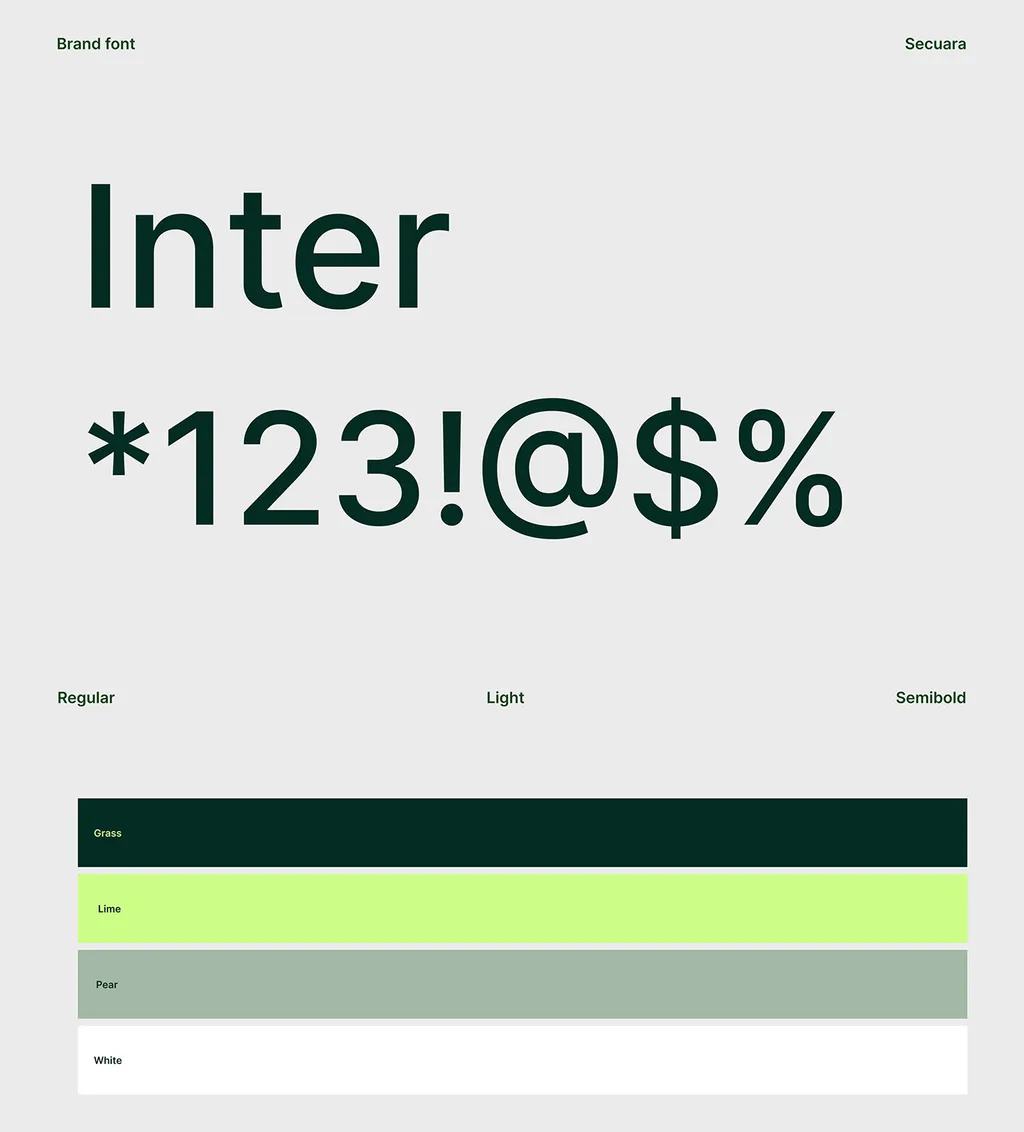
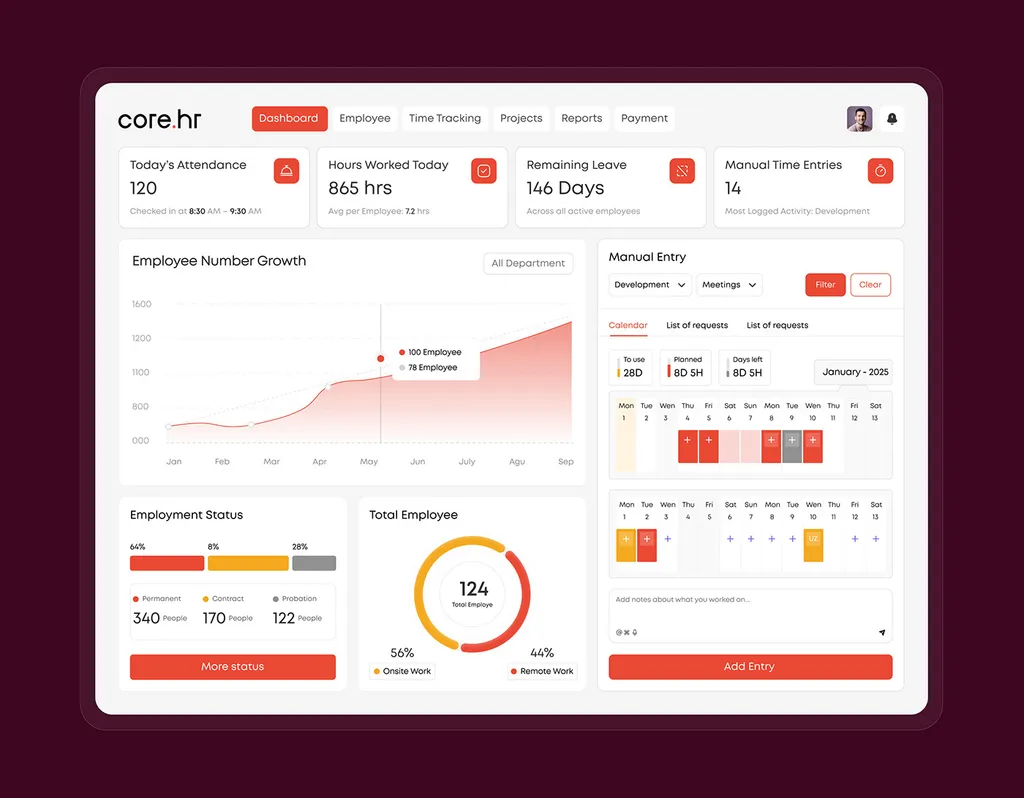
This is how it looked in three of my projects, without claiming results I haven’t published. Secuara, a cybersecurity company, wanted a brand that felt “bold and human, not cold and technical,” so it uses Inter for clear, technical reading, and its app, dashboard and website turn audits and protection into plain screens. Core.hr runs the same system across the website and the product on the web, the phone and the watch, so the demo matches the site. ROMO Logistics built its website around one line, “Reliable. Innovative. Secure.”, and a monogram on a strict grid that works as an app icon, a sign and a parcel stamp.
What a B2B brand strategy is not
- Not a logo. A new logo on an unclear position changes nothing in procurement.
- Not a purpose statement on its own. Values and mission matter to employees and some buyers, but they rarely answer what a buying group asks: why you, why now, and is it safe?
- Not lead generation. A brand strategy does not replace sales or demand generation; it makes both work better by giving them one story. The ROI of branding article covers how to judge what it returns.
- Not a one-time document. It should be revisited when the company moves upmarket, enters a new market, adds a product line, or keeps losing to “no decision.”
B2B brand strategy examples from my work
I do not publish results from client deals, so these show the strategic choices, not sales outcomes. More B2B projects are in the SaaS and tech work.
Core.hr, an HR software company, sells to organizations. The rebrand repositioned it from a policy-driven system to a people-first experience, a position that speaks to the HR buyer’s personal stake in how employees experience their tools, and carried that idea from the brand into the product UI and the website.
Secuara, a cybersecurity brand, stood apart in a category of shields, padlocks and blue with a brief for a brand that feels “bold and human, not cold and technical.” Its S is built from two leaf-like quarter circles joined like nodes in a network, which lock together like a shield in motion, in green and lime rather than blue. In a category where buyers see little difference between suppliers, the distinct look is part of being remembered.

For industrial and B2B suppliers specifically (spec sheets, trade-show stands, trucks and the rules that apply to them), the industrial and B2B page has the detail.
Common B2B brand strategy mistakes
- Writing for one persona. The user loves you; procurement has never heard of you.
- Claims without proof. “Best-in-class” in the deck, nothing in the security document.
- A deck, a website and a sales team that disagree. A common finding in B2B audits, and one Gartner’s data shows buyers notice.
- Copying the category. The same words and the same blue as every competitor.
- Ignoring the 95%. All budget on in-market leads, nothing on being remembered.
- Treating documents as non-brand. The company profile, the security pack and the RFP template are often the most-read brand assets you have.
- Rebranding visually without repositioning. A new look on the same unclear story; the guide to rebrand or refresh helps you tell which one you need.
Checklist: is your B2B brand strategy working?
- One-sentence positioning that would not fit your top three competitors
- A buying-group map: each role’s beliefs, fears and proof
- Three to five key messages, each with proof you can show
- A voice guide with examples, used by marketing, sales and support
- Distinctive assets chosen and applied consistently
- Website, deck, case studies and reps all saying the same thing
- A procurement pack (profile, security, proposal, pricing, onboarding) that looks like the same company
- Documentation and a security page a technical evaluator can check without calling sales
- Presence aimed at future buyers, not only at active leads
- A named owner and a review date
How long does a B2B brand strategy take, and what does it cost?
A standalone brand strategy takes two to three weeks with me: a discovery workshop with the people who make the final call, a review of your audience and competitors, then positioning, personality, key messages and voice, written up for your team, designers and sales. It is quoted as a fixed price in a written proposal after a free call. If you need the identity as well, a brand identity at $3,499 includes the strategy phase, the visual system and guidelines in two to three weeks (see pricing). If you are comparing studios first, the guide on how to hire a brand designer lists what to check.
If you can, bring notes from recent sales calls, support emails and lost deals to the workshop: the words your buyers already use are better material for positioning than anything written in a meeting room. If you sell to enterprise or government and keep losing to “no decision,” book a free 30-minute call and bring your last three lost deals. We will look at where the story broke.
For startups working out when to invest in which layer of the brand, the branding for startups playbook maps it by stage.
FAQ
What is a B2B brand strategy?
A written set of decisions about who a B2B company serves, why it rather than the alternatives, what it says and how it proves it, and how it sounds and looks, built around how buying groups actually decide. It covers positioning, a buying-group map, key messages with proof, voice and distinctive assets.
Does branding matter in B2B?
Yes, for two reasons research supports. Most potential buyers are not in the market at any moment, so being remembered when they are matters; and business buyers carry personal risk, so a brand that makes choosing you feel safe and makes the champion look good outweighs a longer feature list.
What is the 95:5 rule in B2B?
A rule of thumb from 2021 research by Professor John Dawes of the Ehrenberg-Bass Institute with the LinkedIn B2B Institute: in many B2B categories only about 5% of potential buyers are in the market in a given quarter, and the other 95% will buy later. Dawes calls the figure a heuristic, and the exact share varies by category.
What builds B2B brand credibility with technical buyers?
Evidence they can check themselves: complete, current documentation, a security page with the certifications you actually hold, specific claims instead of “seamless” and “scalable,” and case studies that name the stack and scale. In Stack Overflow’s 2025 survey, developers ranked reputation for quality first and brand image eighth of nine when choosing work tools.
What does procurement look for in a vendor’s brand?
Evidence of stability and a clean process: a clear company profile, consistent documents, references, certifications and security documentation, transparent pricing and standard terms. Inconsistency between documents reads as operational risk.
How long does a B2B brand strategy take?
A standalone brand strategy takes two to three weeks with me, from workshop to written strategy, at a fixed price quoted after a free call. A brand identity that includes strategy, the visual system and guidelines is $3,499 and also takes two to three weeks.
Sources
- Ehrenberg-Bass Institute: John Dawes, Advertising effectiveness and the 95-5 rule (2021)
- Forrester: The State of Business Buying, 2026 (January 2026)
- Gartner: 67% of B2B buyers prefer a rep-free experience (March 2026)
- Gartner: 61% of B2B buyers prefer a rep-free buying experience (June 2025)
- Google and CEB: From Promotion to Emotion, Connecting B2B Customers to Brands (2013)
- Stack Overflow: 2025 Developer Survey, Work (technology purchases)