What Is Digital Branding, and What Do the Services Include?
What digital branding services actually cover: the brand system a designer makes for screens, the marketing an agency runs, and how to split the work well.

Summarize with AI
Key takeaways
- Branding decides how the brand looks, sounds and behaves online; marketing decides who sees it and what they do next.
- Agencies use “digital branding” for anything from logo design to SEO, ads and social media. Ask which of those a quote actually pays for.
- On the design side, the deliverables are an identity, guidelines and a Figma library built for screens, plus an AI-ready brand system and website design if you need them.
- Running social accounts, buying ads, SEO and building the website are separate jobs for a marketing agency, a developer or your own team.
- Finish the brand system before the marketing budget starts, or the ads and posts will need redoing when the brand changes.
Digital branding is making a brand’s identity (its name, logo, colors, type, imagery and voice) work, and stay consistent, everywhere people meet it online: the website, social profiles, search results, apps, emails and ads. The label usually covers two different jobs. One is designing the brand system for screens: identity, guidelines, templates and files. The other is marketing that brand online through social media management, paid ads, SEO and content. I do the first, and this article explains both so you can tell which one a provider is selling.
I’m Masuder Rahaman, a brand designer and the founder of Wolfpixel, where I lead the design team. I design brand identities, guidelines and the files a team needs to use them on screen. I don’t run ads, SEO or social media for clients, and I don’t build websites, so this article is specific about where my work stops and who picks it up.
What is digital branding?
There’s no single official definition. Wikipedia’s digital branding entry calls it a brand management technique that combines internet branding and digital marketing, and says its goal “is not necessarily driving sales” but building awareness, image and style.
The word “brand” has a plainer definition. The American Marketing Association defines a brand as a distinctive feature, such as a name, term, design or symbol, that identifies goods or services. Digital branding keeps those features distinct and consistent on screens, where people meet a brand in small, fast and scattered moments: a favicon in a browser tab, a profile picture in a feed, a site name in search results, an app icon on a phone.
A digital brand strategy is the plan behind it: who the brand is for, what it should be known for, which channels matter, and how the brand should look and sound on each. It comes before both the design and the marketing.
Digital branding vs digital marketing
The two are often sold together, but they answer different questions.
| Compare | Digital branding | Digital marketing |
|---|---|---|
| Question it answers | What should people recognize, remember and trust? | How do we reach people and get them to act? |
| Main outputs | Identity, guidelines, templates, design files, voice | Campaigns, ads, posts, SEO work, email sequences |
| How long it lasts | Years, with occasional refreshes | Weeks to months per campaign |
| How it’s paid for | Usually a project fee | Usually a monthly retainer, plus ad spend |
| Typical provider | Brand designer or branding studio | Marketing agency, freelancers or an in-house team |
| How success shows | Consistency, recognition, a team that can use the system on its own | Traffic, leads, sales, cost per result |
Neither replaces the other. A strong identity with no marketing reaches few people. Marketing without a settled identity spends money showing people a brand that keeps changing.
What do digital branding services usually include?
Providers put a wide range of services under this label. Here are the common ones, grouped by what each item actually is.
| Service | Branding or marketing? | In my services? |
|---|---|---|
| Brand strategy and positioning | Branding | Yes |
| Naming | Branding | Yes, as a separate service |
| Logo and visual identity | Branding | Yes |
| Brand voice and messaging | Branding | Yes, brand voice |
| Brand guidelines | Branding | Yes |
| Website design | Both | Premium package only (Figma, no build) |
| Website development | Neither; it’s engineering | No |
| Social media management | Marketing | No |
| Paid ads (PPC, paid social) | Marketing | No |
| SEO and content marketing | Marketing | No |
| Reputation management | Marketing and PR | No |
| Ad campaign production | Marketing | No |
Providers draw the line in different places. Some keep identity, messaging and guidelines in one service and sell web, social, ads and SEO separately. Others list SEO, pay-per-click and email under the same heading as logo design. Both models exist, but they aren’t the same purchase: a “digital branding” quote from the second kind of agency may be mostly a marketing retainer.
What a brand designer delivers for digital use
This is the part I do. A brand identity project covers strategy and positioning, a logo system, color and typography, imagery and icons, brand voice, and guidelines. Here’s how each piece is built for screens as well as print.
An identity that works on small screens
- A compact mark. Google’s favicon guidelines ask for a square icon of at least 8×8 px, recommend going larger than 48×48 px, and want it to represent your brand. A wide wordmark doesn’t fit, so the logo system needs a symbol or monogram that still reads at that size. The same mark serves as the social profile picture and the app icon.
- Colors that work for text. The W3C’s contrast guidance sets a ratio of at least 4.5:1 for normal text and 3:1 for large text. Logos are exempt, but buttons, links and body copy in brand colors aren’t. I check which color pairs work for text before the palette is final.
- Type that’s licensed for screens. Some foundries license desktop, web and app use separately. The brand typefaces should cover every place you’ll use them, or be open-license fonts.
- One name everywhere. Google shows a site name in search results and says that WebSite structured data is the most important signal if you want to state your preferred site name. Your developer adds the markup. The brand’s job is to settle the name, any short form and how it’s written, so the website, profiles and documents all match.
Guidelines your team can use without me
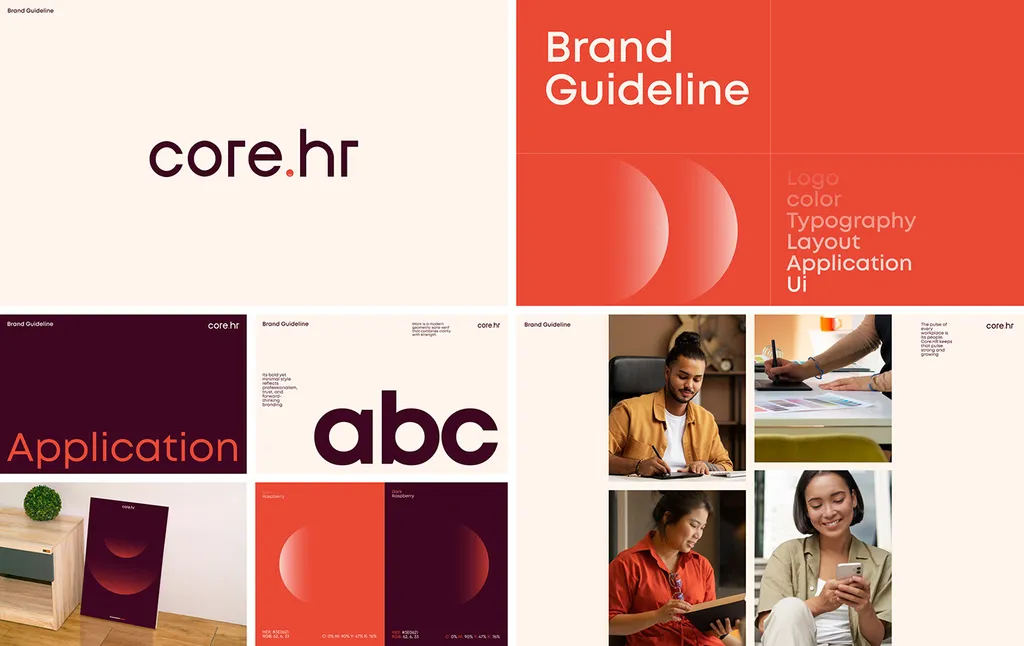
Brand guidelines are handed over as PDF, PowerPoint and Illustrator files, plus a Figma library with the source files. The Figma library matters most for digital work. Your team, a freelancer or an agency can design new posts, pages and ads from the same logo files, color styles and type styles, instead of rebuilding them from screenshots. The guidelines from the Core.hr rebrand below are an example, and my article on brand guidelines for a small team covers what a team actually needs in them.
An AI-ready brand system
More brand material is now drafted with AI tools, by your team or an agency. The AI-ready brand system turns the brand into files those tools and their users can follow: design tokens in JSON, an AI image style guide, brand voice for AI and an AI review checklist. Design tokens now have a shared format: the W3C Design Tokens Community Group published the first stable version of its format specification in October 2025. Tokens let a developer or a tool use the brand’s exact color and type values instead of guessing them.
Templates and website design, where they’re in scope
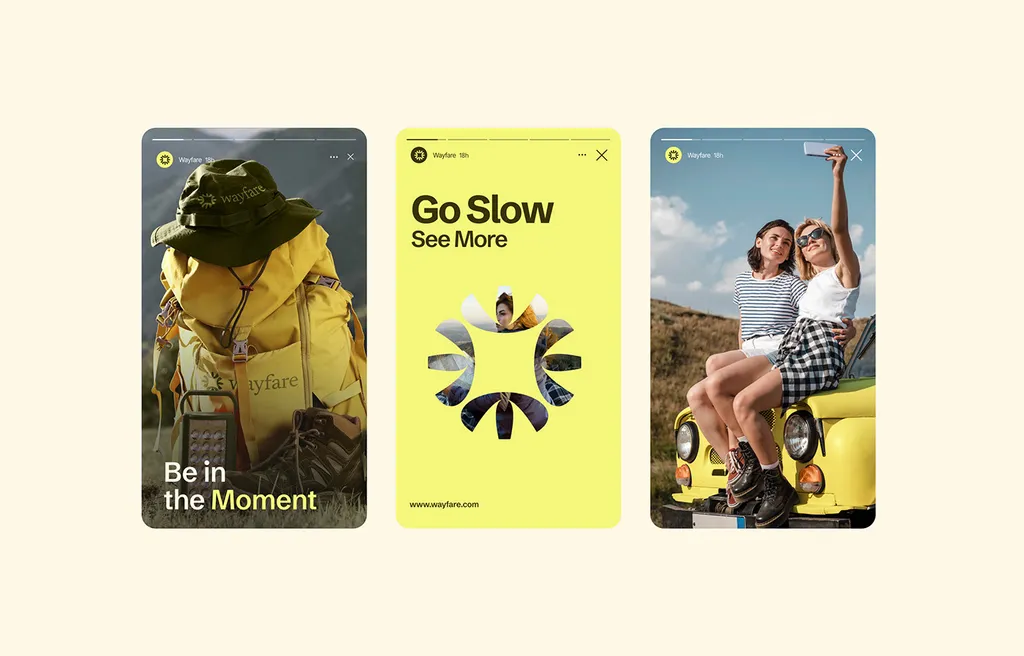
- Social templates. Post and story designs built from the identity help your team or agency stay consistent. They’re part of my personal branding service. For a company brand, they can be added as custom scope in your written proposal.
- Website design. The Premium package includes website design in Figma for the pages agreed in your proposal. Building the site is a separate job for your developer or team.
Where my work stops, and who picks it up
I don’t sell, run or manage:
- Social media accounts: posting, scheduling, community replies, influencer work
- Paid advertising: Google Ads, paid social, ad buying and optimization
- SEO and content marketing: keyword research, articles, link building
- Email marketing: sequences, newsletters, list growth
- Website development: building, hosting and maintaining the site
- Ad campaign production: shooting and producing ads and videos
- Trademark filing: your lawyer files it; I hand over clean files
For these you need a marketing agency, specialists or your own team. That work is the next stage after the brand, and it goes better when the people doing it start from finished guidelines and files instead of improvising the brand as they go.
How to split the work between designer and marketer
| Stage | Who does it | What gets handed on |
|---|---|---|
| 1. Brand: strategy, identity, voice, guidelines | Brand designer | Guidelines, Figma library, logo and source files |
| 2. Digital system: design tokens, AI guidance, templates if in scope | Brand designer | Tokens in JSON, AI style guide, voice for AI, templates |
| 3. Website design: layouts for the agreed pages | Web designer (me, in the Premium package) | Figma files |
| 4. Website build: working site, hosting, analytics | Web developer or in-house team | Live website |
| 5. Marketing: social, ads, SEO, content, email | Marketing agency or in-house team | Campaigns and reports |
Two rules keep the split working:
- Finish stage 1 before stage 5 spends money. Ad and social budgets amplify whatever brand they’re given. If that brand changes three months later, the ads, posts and profiles all need redoing.
- Make the hand-off files the reference. Ask the marketing agency to work from your guidelines and Figma library, and to come back to you when something isn’t covered rather than invent new versions.
Questions to ask any digital branding provider
| Question | Why it matters |
|---|---|
| Which do you do: strategy, identity, guidelines, web design, build, social, ads, SEO? | Separates design from marketing in the quote |
| Is it a one-off project or a monthly retainer? | Identity is usually a project; marketing is usually a retainer |
| Is ad spend included or separate? | Many retainers exclude it |
| Which files do I own at the end? | You should own the final and source files |
| Will I get a Figma library, or only PDFs? | Editable files let others work from the brand later |
| Who designs the website, and who builds it? | Design and development are different skills |
| How many concepts and revisions are included? | They drive most of the design time |
| Can I take the brand to another agency later? | You shouldn’t be locked in to keep using your own brand |
If you’re weighing a solo designer against an agency, my article on brand designer vs branding agency goes further.
Where to start with your digital brand
For the brand side of digital branding, there are two fixed packages:
| Package | What you get | Price and timeline |
|---|---|---|
| Brand identity | 4 concepts, identity and guidelines (PDF, PowerPoint, Illustrator, Figma library); unlimited revisions within the agreed scope | $3,499; 2–3 weeks |
| Premium | Everything in Brand identity, plus an AI-ready brand system and website design in Figma (no build) | $6,999; 4–6 weeks |
Prices are in US dollars, as shown on the pricing page on 9 November 2026; if you’re planning a 2027 project, the pricing page shows the current figures. Any other scope gets a fixed written proposal after a free 30-minute call, and the price doesn’t change mid-project.
To talk through what your brand needs before the marketing starts, book a free 30-minute call in your time zone. The full scope of the identity work is on the brand identity page.
FAQ
What are digital branding services?
Services that make a brand recognizable and consistent online. Depending on the provider, that means designing the brand system, marketing it through social media, ads and SEO, or both, so ask which before you compare quotes.
What is the difference between digital branding and digital marketing?
Digital branding sets how the brand looks, sounds and behaves online. Digital marketing gets it in front of people through ads, social media, SEO and email. Branding is usually a one-off project; marketing is usually ongoing.
What is a digital brand strategy?
The plan for the brand online: its audience, what it should be known for, which channels matter and how it should look and sound on each. It comes before both the design and the marketing.
Do you run social media, ads or SEO?
No. I design the brand system: identity, guidelines, a Figma library and, in the Premium package, an AI-ready brand system and website design in Figma. Social media, ads, SEO and website development are for a marketing agency, a developer or your own team.
What files should I get from a digital branding project?
Brand guidelines, logo files in every format you need (including a compact mark for favicons and profile pictures), color and type values, and editable source files. With me, that’s guidelines as PDF, PowerPoint and Illustrator files plus a Figma library, and you own all final files.
Should branding come before digital marketing?
Yes. Marketing spends money showing the brand to people, so if the identity changes afterwards, the ads, posts, profiles and pages all need redoing.
Sources