Rebrand or refresh? How to tell which you need
Five questions that show if you need a full rebrand or a refresh.

Summarize with AI
Key takeaways
- A refresh updates how your brand looks and sounds but keeps its name, strategy and the things people recognize. A rebrand changes what the brand stands for, and sometimes its name.
- Five questions decide it: has the business changed, is the name the problem, what do customers recognize, is the issue the look or the meaning, and can you absorb the switching costs?
- Most companies need a refresh. If a rebrand changes your name or domain, plan the trademark search, the redirects and Google’s Change of Address tool before launch.
A brand refresh updates how your brand looks and sounds, such as the logo details, colors, type and imagery, while keeping its name, its strategy and the things customers already recognize. A rebrand changes what the brand stands for: its positioning, its identity and sometimes its name. Most companies that feel “dated” need a refresh. A rebrand makes sense when the business itself has changed. The five questions below show which one you need.
Rebrand vs refresh at a glance
| Refresh | Rebrand | |
|---|---|---|
| Name | Stays | Can change |
| Strategy | Stays | Changes |
| Logo | Refined | Often new |
| Color and type | Updated | New system |
| Risk | Lower | Higher |
| Typical design time | 3–6 weeks | 6–12 weeks |
Rollout comes on top of the design time: the website, signage, packaging and every account that shows your logo.
Five questions that tell you which you need
1. Has the business changed?
A new offer, a new audience, a merger or a new market can make the old brand tell the wrong story. That’s the classic case for a rebrand. In a study of 166 rebrands, researchers Laurent Muzellec and Mary Lambkin found that rebrands were most often triggered by structural changes, particularly mergers and acquisitions.
Kia is a good example of change from the inside out. In January 2021 it introduced a new logo and slogan, dropped “Motors” from its company name and set out a plan built around electric vehicles. Facebook did the same at company level in October 2021, when it renamed the company Meta while the apps kept their names.
If what you sell and who you sell to haven’t changed, you probably need a refresh.
2. Is the name itself the problem?
A name has to change when it causes a legal conflict, misleads people about what you do, or carries baggage you can’t shake. Then only a rebrand will do.
A name can also change while the look stays familiar. Dunkin’ Donuts became Dunkin’ in January 2019 but kept its pink and orange colors and its familiar lettering, so the new name still looked like Dunkin’.
3. What do customers already recognize?
Before you change anything, list what people already know you by: a color, a symbol, a character or a shape. Keep those and change the rest.
Mastercard is the textbook case. In 2016 Pentagram simplified its interlocking circles and wordmark. In 2019 the company began showing the circles without the name on cards, at retailers and in advertising, after research showed that more than 80% of people recognized the symbol without the word “Mastercard”.
Changing a recognized asset can backfire:
- Gap swapped its blue box logo for a new one on its website in October 2010, and went back to the blue box about a week later after customers objected.
- Tropicana dropped the orange with a straw from its cartons in January 2009. Advertising Age, citing IRI data, reported that unit sales of Tropicana Pure Premium fell 20% between 1 January and 22 February. PepsiCo brought back the old design.
- Cracker Barrel replaced its “Old Timer” logo, the man leaning on a barrel, with a text-only logo in August 2025. Its shares fell more than 10% within a week, according to Dow Jones Market Data, and the company then said the Old Timer would stay.
Research explains why. In an experiment with 632 people, Michael Walsh, Karen Winterich and Vikas Mittal tested redesigned, rounder versions of two sports brands’ logos. Customers strongly committed to the brand reacted negatively, while weakly committed customers reacted positively. Your most loyal customers are the most likely to react badly.
4. Is the problem how you look, or what you stand for?
If people like what you do but the brand looks dated, inconsistent or hard to use on screens, a refresh fixes it. Burger King’s 2021 redesign by Jones Knowles Ritchie, its first in 20 years, introduced a new logo that echoes the one it used from 1969 to 1999, a custom typeface called Flame and new packaging. The name and what the brand stands for stayed the same. In 2023, Pepsi introduced its first update of the Pepsi globe in 14 years, with electric blue and black.
If the problem is what people think you stand for, new visuals alone won’t fix it. You need a rebrand, starting with strategy.
For Core.hr, an HR software company, the name stayed but the idea behind it changed: HR as a people-first experience rather than a policy-driven system. So we rebuilt the identity, the product UI and the website around that idea.
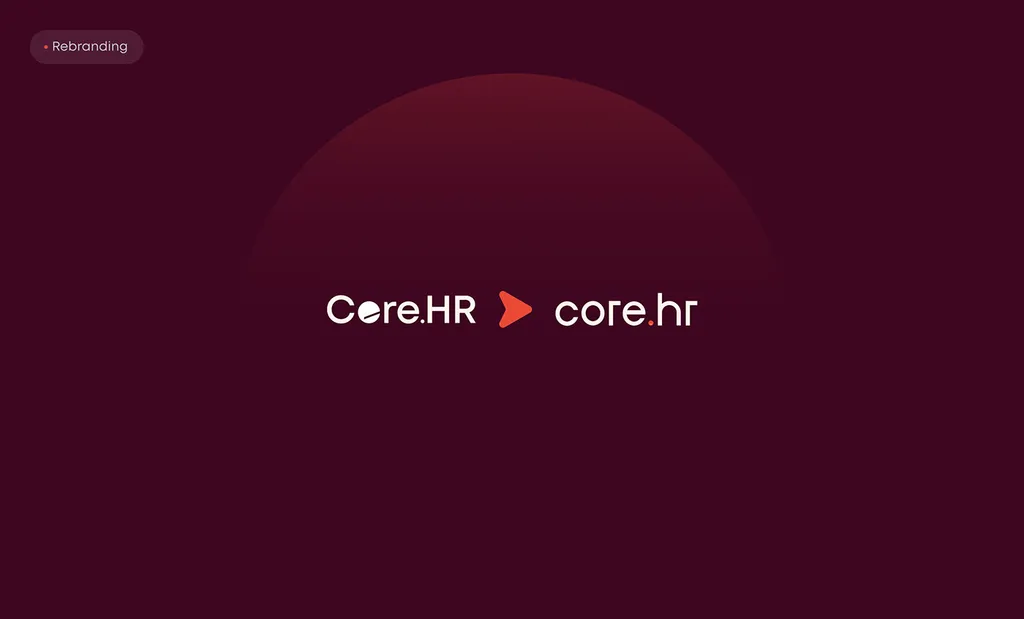
From a busy capitalised logotype to a calm lowercase wordmark: the Core.hr rebrand.
5. Can you absorb the switching costs?
A rebrand costs more than design. A name or domain change means trademark searches and filings, a new domain and redirects, new signage, vehicles and packaging, legal paperwork, and time spent explaining the change to customers.
The biggest rebrands show the scale. Jaguar unveiled a new identity in November 2024 and called it “a complete reset”, at a time when it had stopped selling new cars in the UK ahead of its move to electric cars. Its first production model under the new brand, the Type 01, was only unveiled in October 2026, with deliveries planned for the second half of 2027. When Twitter became X in July 2023, analysts quoted by Bloomberg estimated that billions of dollars of brand value could be lost.
If the costs outweigh the benefits right now, a refresh can buy you time.
If your name or domain changes
This is general information, not legal advice.
- Clear the name. Search the USPTO’s Trademark Search, then do a wider clearance search of state records, common-law use and the web, ideally with a trademark attorney. In the UAE, use the Ministry of Economy and Tourism’s trademark services, and in Saudi Arabia, SAIP.
- Update the paperwork. In the US, tell the IRS about the new name; the steps depend on your type of business. A name change alone doesn’t need a new Employer Identification Number (EIN), but a change of ownership or legal structure can.
- Redirect every old URL. Google recommends server-side 301 redirects from each old page to its new equivalent, kept in place for as long as possible, generally at least a year.
- Tell Google. For a domain change, use the Change of Address tool in Search Console. It needs a 301 redirect from the old homepage and access to both sites.
- Keep the old domain. Keep it registered and redirecting long after the move.
- Expect a dip. Google says rankings can fluctuate while it processes a move, and a medium-sized site can take a few weeks. If you can, don’t redesign every page at the same time.
- Update everywhere else: social profiles, app stores, email signatures, invoices and signage.
What the research says
Three findings are worth keeping in mind:
- Committed customers react most negatively to a logo change (Walsh, Winterich and Mittal, 2010).
- A name change is a signal, not a cure. In a 1987 study of 58 companies, Dan Horsky and Patrick Swyngedouw found that name changes tended to go with better performance, but as a sign of other changes in the business rather than its cause.
- Rebrands most often follow structural change, particularly a merger or acquisition (Muzellec and Lambkin, 2006).
In short, change the brand when the business has changed, and protect what customers already recognize.
How to decide
- Mostly no to questions 1 and 2, and yes to recognized assets? Choose a refresh, or start with logo refinement.
- Yes to question 1 or 2? Plan a rebrand, starting with strategy.
- Not sure? Start with an audit of what customers recognize and what they misunderstand, then decide. Our brand refresh service starts there.
FAQ
What is the difference between a rebrand and a brand refresh?
A refresh updates the look and feel, such as the logo details, colors, type and imagery, but keeps the name, the strategy and the assets people recognize. A rebrand changes the positioning and the identity, and sometimes the name.
How do I know if my business needs a rebrand?
You probably need a rebrand if the business has changed (a new offer, audience, market or a merger), or if the name causes a legal conflict or misleads people. If only the look feels dated or inconsistent, a refresh is usually enough.
Is changing a logo a rebrand or a refresh?
Refining a logo while keeping its recognizable parts is a refresh. Replacing the logo along with the name or the strategy is a rebrand.
How long does a rebrand take?
The strategy and design work for a rebrand usually take 6–12 weeks, and a refresh 3–6 weeks. Rolling it out to the website, signage, packaging and accounts comes on top.
Will rebranding hurt my SEO?
A new look on the same URLs, with the same content, usually doesn’t. Changing the domain or the URLs can cause a temporary dip, so use page-by-page 301 redirects, keep them for at least a year, and use Google Search Console’s Change of Address tool for a domain change.
Sources
- Muzellec & Lambkin: Corporate rebranding (European Journal of Marketing, 2006)
- Advertising Age: Tropicana line’s sales plunge 20% post-rebranding (2009)
- Walsh, Winterich & Mittal: Do logo redesigns help or hurt your brand? (Journal of Product & Brand Management, 2010)
- USPTO: Comprehensive clearance search for similar trademarks
- Google Search Central: Site moves with URL changes