The ROI of Branding: How a Strong Brand Lowers CAC
Is branding worth it? The four numbers a strong brand moves, how investors read it, when it won’t pay back, and a one-page worksheet to measure the ROI of branding.

Summarize with AI
Key takeaways
- Branding pays back through four metrics you already track: conversion rate, pricing power, customer acquisition cost and sales cycle length. If you can’t name which of the four you’re buying, don’t buy yet.
- Investors read brands as a proxy for operating discipline. A consistent brand lowers perceived risk, and lower perceived risk can show up in the terms.
- You can measure brand impact without a research budget. Record six numbers before the work starts and again at 90 and 180 days; the worksheet below lists them.
- Branding won’t rescue a product people don’t want, and it rarely pays back inside one quarter. Both facts belong in the business case.
Is branding worth it? Usually yes, if you can name which numbers it should move and can wait six months or more to see them; usually not, if the product isn’t retaining users yet. The ROI of branding is real, but it doesn’t arrive as a line item called “brand.” It arrives as a higher conversion rate on the same traffic, a price you can hold when a competitor discounts, a lower cost per customer because more of them come to you directly, and a shorter sales cycle because buyers trust you sooner. Investors then price those improvements into how they see the company. That’s the whole argument, and the rest of this article shows how each piece works and how to measure it.
I’m Masuder Rahaman, a brand designer and the founder of Wolfpixel, where I lead the design team. In more than eight years of design and 350+ projects, most of my clients have been startup founders in the US, the UK, the UAE and Saudi Arabia, and the question underneath almost every first call is the same: “How do I justify this to my co-founder?” This is the answer I give.
Does branding increase sales?
Not directly, which is why it’s the wrong question to start with. Branding changes the odds at every step where a stranger decides whether to trust you: the first visit, the pricing page, the proposal, the renewal. Those odds compound, and the compounding is where the return lives.
That’s why the ROI of branding is hard to see on a dashboard that only tracks last-click attribution. A 2021 paper by Professor John Dawes of the Ehrenberg-Bass Institute, published by LinkedIn’s B2B Institute, put a number on the problem: up to 95% of business buyers aren’t in the market for many goods and services at any one time. Your marketing reaches them long before they’re ready, and what they remember when they finally are ready is your brand, not your last ad. Dawes is clear that 95% is a heuristic, not a precise rule, but the direction holds for any product people don’t buy every week.
So the useful question isn’t “does branding increase sales?” It’s “which numbers does branding move, by how much, and over what period?” Four numbers do most of the work.
How does branding pay back? Four mechanisms
A stronger brand pays back through conversion rate, pricing power, acquisition cost and sales cycle, four numbers you already track.
1. Conversion rate: trust decided in seconds
A visitor decides whether you look credible before they read a word. Stanford’s Persuasive Technology Lab studied this with Consumer WebWatch in a large web credibility study: 2,684 people evaluated live websites, and a site’s overall design or look came up in 46.1% of their comments about its credibility. The effect was strongest for finance sites, where 54.6% of the comments were about visual design.
The study is from 2002, and the web has changed. The human reflex it describes hasn’t. If anything, AI-generated sites and generic templates have raised the bar for looking deliberate. A startup with a credible brand converts more of the same traffic into sign-ups, demos and purchases, and that uplift costs nothing extra per visitor.
What to measure: conversion rate from visit to sign-up (or lead), and from pricing page to checkout or booked demo, on the same traffic sources before and after.
2. Pricing power: the margin you get to keep
A strong brand lets you charge what the product is worth instead of what the cheapest competitor charges. This is the mechanism investors understand fastest, because it goes straight to gross margin and LTV.
McKinsey tracked 300 public companies over five years and built the McKinsey Design Index to score how seriously each one treated design. Top-quartile scorers grew revenue 32 percentage points faster and total returns to shareholders 56 percentage points faster than their industry peers over the period. The study covers design broadly, product as well as brand, and it’s a correlation, not a controlled experiment. But its finding that the differences between the fourth, third and second quartiles were marginal is the important lesson for a founder: design pays when it’s done well enough to stand out, not when it’s done a little.
What to measure: average contract value or average order value, discount rate (how often and how deep you discount to close), and the share of deals won at list price.
3. Customer acquisition cost: more people come to you
CAC drops when a larger share of customers arrives without a paid click. Branded search, direct traffic, referrals and word of mouth are all cheaper than cold acquisition, and all of them grow with brand recognition. There’s a second-order effect inside paid channels too: ads for a brand people recognize tend to earn higher click-through rates on the same budget, which is the signal ad platforms reward.
Les Binet and Peter Field’s work on the IPA effectiveness databank is the standard reference here. Their rule of thumb for consumer brands is roughly a 60/40 split between long-term brand building and short-term activation, and for B2B they put it at around 46% for brand building and 54% for activation, as a guiding principle rather than a precise rule. Their warning matters more than the exact split: long-term effects only start to outweigh short-term ones after about six months, yet LinkedIn’s own survey in the same report found that only 4% of B2B marketers measure impact beyond six months. If your reporting window is 30 days, you’ll never see branding pay back, even when it does.
What to measure: blended CAC, the share of new customers from direct, branded search and referral sources, and branded search volume (Google Search Console shows it for free).
4. Sales cycle and win rate: fewer objections to clear
In B2B, the brand is doing work in rooms you aren’t in. A buyer forwards your website to a colleague. A procurement lead checks you against two competitors. A champion has to explain to their boss why they picked the startup over the incumbent. Every one of those moments goes faster when the brand looks like a company that will still exist in three years.
This is the part of branding ROI that founders feel first and measure last. Shorter cycles mean the same sales team closes more per quarter. Higher win rates mean the pipeline you already paid for is worth more.
What to measure: median days from first meeting to closed-won, win rate against named competitors, and how often “we weren’t sure you were established enough” appears in lost-deal notes.
The four mechanisms at a glance
| Mechanism | What a stronger brand changes | What to measure |
|---|---|---|
| Conversion rate | More of the same traffic trusts you enough to act | Visit to sign-up or lead; pricing page to checkout or demo |
| Pricing power | You hold your price instead of matching the cheapest | Average contract or order value; discount rate; deals won at list price |
| Acquisition cost | More customers arrive without a paid click | Blended CAC; share from direct, branded search and referral; branded search volume |
| Sales cycle and win rate | Buyers clear their doubts faster | Median days to closed-won; win rate against named competitors; “not established enough” in lost-deal notes |
Does branding raise a startup’s valuation?
Not on its own, but investors price risk, and a coherent brand lowers the risk they perceive. Investors rarely say “we need to see a stronger brand.” They say “we need to see a company that can scale,” and they use everything in front of them to judge whether you can. A deck, a website and a product that look like three different companies signal that nobody owns the details. A brand that holds together across all three signals that someone does.
Brand equity is the capitalized value of the extra profit a brand earns over an unbranded equivalent. In 2026 the investment firm WestCap, working with Bella Private Markets and the brand tracker Tracksuit, matched monthly brand-health survey data to company valuations. Their study covered 21 public companies, including Airbnb, Amazon and Reddit, across 611 company-month observations from December 2021 to April 2026, and found that awareness, consideration, usage and preference all moved with valuation. The authors are careful: correlation doesn’t prove causation, 21 companies over four years isn’t enough for a universal rule, and one reading is that brand health reflects business health rather than only driving perception.
For a seed or Series A founder, the practical translation is this. Investors can’t see your brand equity on a cap table, but they price risk, and a coherent brand lowers the risk they perceive. Tomasz Tunguz, now of Theory Ventures, wrote that for the most valuable global brands brand equity is a material fraction of market cap, yet for startups immediate changes in it are nearly impossible to quantify. The worksheet below is how you quantify it anyway.
How do you measure the ROI of branding?
Record a baseline before the work starts, measure the same numbers at 90 and 180 days, and divide the extra gross profit by the cost. This one-page worksheet does it. Copy it before the project starts. Fill in the baseline column from the last 90 days, and the other two columns at 90 and 180 days after launch. Keep traffic sources, pricing and sales headcount as stable as you can, and write down anything that changed, so you don’t credit the brand for a price cut or a new sales hire.
Here’s the worksheet filled in for an imaginary B2B startup. The numbers are an illustration of how to read it, not a client’s results.
| Metric | Baseline | After 180 days |
|---|---|---|
| Direct traffic (sessions) | 2,400 | 3,360 (+40%) |
| Branded search impressions / clicks | 8,000 / 520 | 13,200 / 910 |
| Visit-to-lead conversion rate | 2.8% | 3.7% |
| Pricing page to purchase or demo | 4.5% | 6.0% |
| Blended customer acquisition cost (CAC) | $800 | $690 |
| New customers from direct / branded search / referral | 15% / 10% / 12% | 24% / 17% / 18% |
| Average contract or order value | $5,000 | $5,600 |
| Discount rate on closed deals | 18% | 12% |
| Win rate against competitors | 25% | 34% |
| Median sales cycle | 45 days | 38 days |
| Investor and candidate feedback | Mixed recognition, unclear positioning | Stronger recognition, positive notes on consistency |
Record other changes next to the numbers: a new marketing campaign, revised pricing, a better sales process, a product launch or a change in ad spend can all move these results. Writing them down stops you from crediting every improvement to the rebrand.
Three rules make the worksheet honest:
- Six metrics minimum, before you start. If the baseline is missing, the “after” numbers prove nothing.
- Six months minimum before you judge. Branding compounds; 30-day reads mostly measure launch noise.
- One change at a time where possible. If you rebrand and raise prices in the same week, you learn nothing about either.
A simple ROI line at the end: (incremental gross profit over 12 months attributable to the four mechanisms) ÷ (total brand investment). Be conservative with “attributable.” A figure you can defend to a skeptical CFO is worth more than a flattering one.
Two before-and-after stories from client work
Numbers belong to the client, so these are told as what changed in the brand and what the client reported. Each links to the full story.
Core.hr: from a busy logotype to a system the product could carry
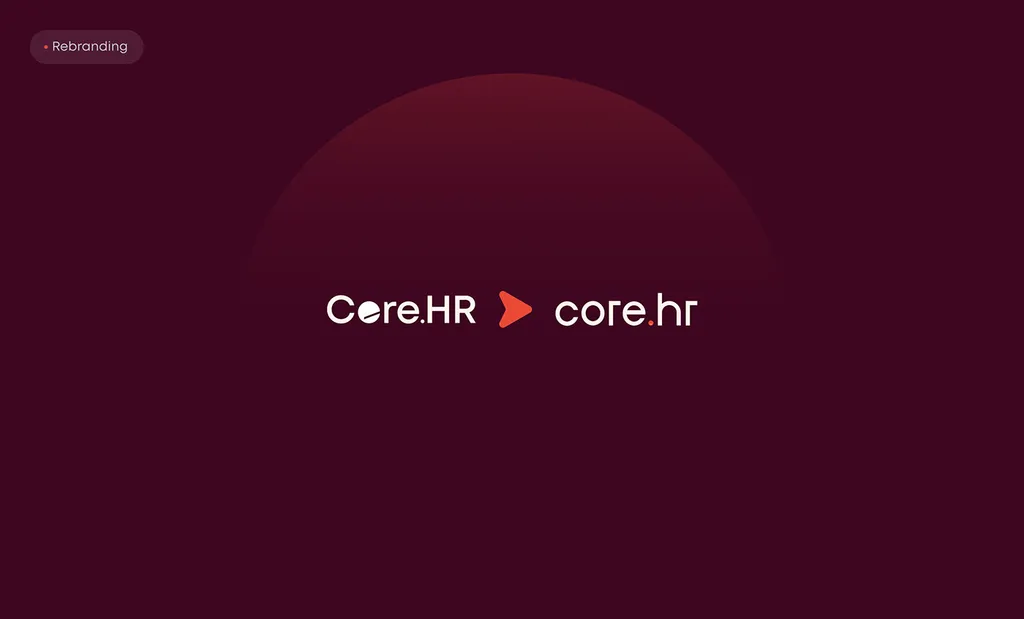
Core.hr is an HR software platform that wants HR to feel like a people-first experience rather than a policy-driven system. Its old brand was a busy, capitalized logotype that said the opposite. The rebrand moved it to a calm lowercase wordmark under a rising red sun, with deep burgundy, warm red gradients and plenty of space.
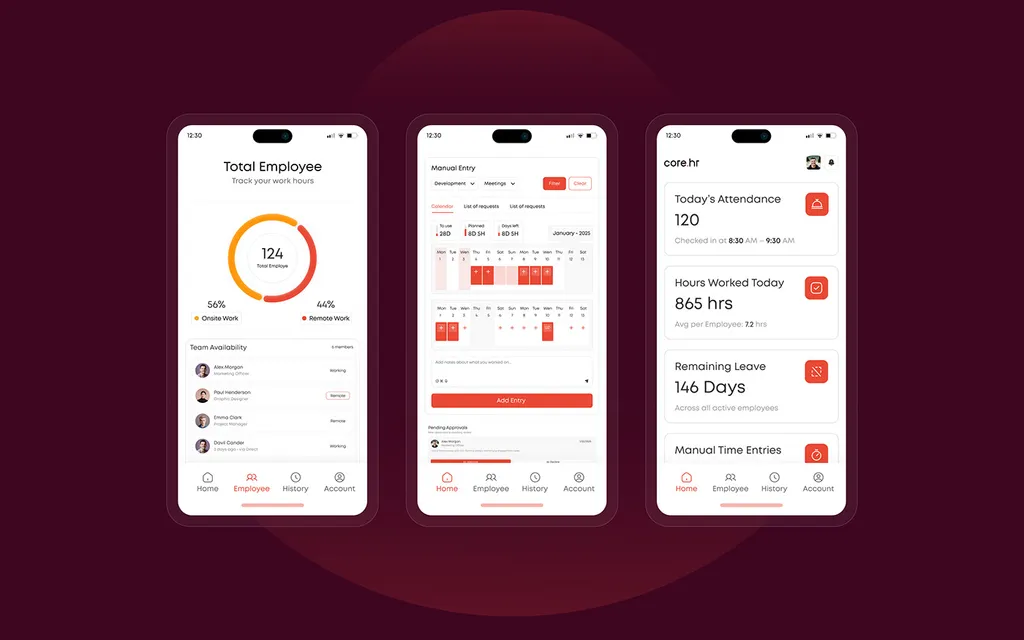
That’s the visible change. The commercial change is that the same system now runs the website, the web app, the phone app and the smartwatch view, so a prospect who moves from a landing page into a trial sees one company the whole way through. That continuity is the trust signal from mechanism one, and it’s why a SaaS brand should cover the product, not just the marketing. See the Core.hr rebrand.
Morley Fredericks Real Estate: a new identity and the feedback it earned
Morley Fredericks Real Estate asked me for a new brand identity, with a new, modern logo. In her Behance review, Susan Crane, the company’s CFO and co-owner, wrote that they were “getting great feedback on the update.” For a real estate brokerage, that feedback comes from the people who matter most: sellers choosing an agent and buyers deciding whom to trust with an offer. The update changed how the company was received. Read the client reviews.
I’d rather show you two true stories with modest claims than ten with invented percentages. When a client shares before-and-after numbers from the worksheet above, they’ll be added here with permission.
When is branding not worth it?
When the product, the positioning or the timeline isn’t ready for it. A business case that only lists upside isn’t a business case. Branding is a poor investment in four situations:
- The product isn’t working yet. If users churn after the first week, a new identity gives you a better-looking churn problem. Fix retention first.
- The positioning is still moving. If the category, the buyer or the name might change in the next six months, you’ll pay twice. A clean wordmark and a two-color palette will hold you until the pivot is done.
- You expect a 30-day payback. Activation campaigns pay back in weeks. Brand pays back over quarters. Budget and report accordingly, or the project will look like a failure in month two and a success in month nine, and the board will remember month two.
- It’s being bought to avoid harder work. A rebrand is sometimes a founder’s way of not fixing sales or not making a hiring decision. It feels productive and changes nothing.
If one of those describes you, wait. The money will be better spent in six months, and the brand you build then will last longer. If none of them describes you and your next raise, launch or move upmarket is within a year, the brand is probably the cheapest lever you haven’t pulled.
How this fits the rest of your brand planning
This article covers why branding pays and how to measure it. Two companion guides cover the next decisions:
- What to build at each stage, and when: Branding for Startups: The Founder’s Playbook From Pre-Seed to Series A
- What it costs and what drives the price: How much does a brand identity cost in 2027?
- What you should get for the money: what a brand identity includes
If the question is whether your existing brand needs replacing or only updating, rebrand or refresh walks through five questions that decide it.
Get an outside read on your brand
If you want a second opinion before you take this case to your co-founder or board, book a free 30-minute call. We’ll look at your current brand against your next raise, launch or market move, and I’ll tell you which of the four mechanisms it’s leaking on and what would fix it. You’ll leave with a clear recommendation whether or not we work together, and a written quote only if you want one. To put a number in the business case first, my fixed packages are on the pricing page: a logo is $999, a brand identity with guidelines $3,499, and the Premium package $6,999.
FAQ
What is the ROI of branding?
The return on a brand investment, measured through the business metrics it changes: conversion rate, pricing power, customer acquisition cost and sales cycle length, and over a longer horizon, company valuation. It’s calculated the same way as any other ROI, incremental gross profit divided by the cost of the work, but it usually needs at least six months to show.
Does branding increase sales?
Indirectly. A credible, consistent brand converts more of the same traffic, supports a higher price, brings in more customers through direct and referral channels, and shortens B2B sales cycles. Each of those raises revenue; none of them is a sales tactic on its own.
How do you measure brand impact without a research budget?
Record a baseline for direct traffic, branded search, two conversion rates, blended CAC and win rate before the work begins, then measure again at 90 and 180 days while holding other variables as steady as you can. Google Analytics, Google Search Console and your CRM provide all of it for free.
Why does brand equity matter for startups raising money?
Investors can’t see brand equity on a cap table, but they price risk, and a brand that holds together across deck, website and product signals a company that controls its details. A 2026 study of 21 public companies by WestCap found brand-health scores moved with valuation, though its authors stress that correlation doesn’t prove causation.
How long does branding take to pay back?
Expect early signals in conversion rate within a quarter and the larger effects on CAC and sales cycle over six to twelve months. Binet and Field’s research for LinkedIn found long-term brand effects only start to outweigh short-term ones after about six months.
Is branding worth it for a startup?
Usually, once the product retains users and the positioning is settled, and you can wait six months or more to judge it. It is not worth it yet if the name or positioning may change soon, if you expect a payback within a month, or if it is standing in for harder sales or product work.
Sources
- LinkedIn B2B Institute: Advertising effectiveness and the 95-5 rule (John Dawes, Ehrenberg-Bass Institute, 2021)
- Stanford Persuasive Technology Lab and Consumer WebWatch: How Do People Evaluate a Web Site’s Credibility? (2002)
- McKinsey & Company: The business value of design (2018)
- LinkedIn B2B Institute: The 5 Principles of Growth in B2B Marketing (Les Binet and Peter Field, 2019)
- WestCap: Brand isn’t vanity. It’s a valuation multiplier (2026)