HVAC Branding Without Another Snowflake
HVAC logo design and branding for the truck, the technician, the Google listing and the invoice: a logo that isn’t a snowflake, and the license details states require.

Summarize with AI
Key takeaways
- Homeowners can’t inspect HVAC work, so they judge the company by what they can see. The FTC tells homeowners to consider only licensed and insured contractors: show both.
- The snowflake, the flame, the thermometer and the swoosh identify the trade, not the company. Many competitors already use one.
- The truck is your biggest sign and, in some states, a regulated one. Plan the name, phone, website and license number before the wrap.
- The technician at the door is the brand. A uniform, an ID badge and a clean van do more than any slogan.
- On Google, the profile name should match the storefront, website and stationery, with no added keywords. Design the logo to work as a tiny profile photo.
Good HVAC branding, and HVAC logo design with it, starts with the four places an HVAC company’s brand is judged: on the truck in traffic and in the driveway, on the technician at the door, on the Google listing, and on the invoice. A logo that works there is bold, simple, readable from across a street in one or two colors, and different from the snowflake, the flame and the house with a thermometer that so many HVAC companies use. Design the truck as a moving sign with room for the details some states require (in California and Texas, the business name and license number at a set size), give technicians a uniform and ID that match it, keep your Google Business Profile name identical to the name on the truck, and put real proof (license, insurance, reviews) where homeowners look before they let someone in.
I’m Masuder Rahaman, a brand designer and the founder of Wolfpixel, where I lead the design team. I design names, logos and brand identities for local service businesses, including home-service trades, remotely. To be clear: I have no published HVAC case study. My closest published work is a landscaping company and a law firm, and I use both below for what they show.
Why do so many HVAC logos look the same?
Because many start from the trade’s symbols instead of the company’s own name, color or character.
Look at the HVAC trucks in most US cities and you will see the same handful of ideas: a snowflake and a flame side by side, often half blue and half red; a house outline with a thermometer or a fan; a swoosh of “air”; and the words “Heating & Air” in a heavy italic. Those symbols are easy to understand, which is why everybody uses them, and that is exactly the problem. When five companies in the same zip code all show a blue snowflake and a red flame, none of them is remembered. Dentists have the same problem with the tooth; the dental practice branding guide shows what they use instead.
Most homeowners can’t judge the technical work, so they choose on trust, availability and price, often in an emergency. The FTC’s advice to homeowners is to consider only contractors who are licensed and insured, to read reviews with a critical eye and to get recommendations from people they trust. Your brand’s job is to be recognized, to look like a real, established company, and to make that proof easy to find.
HVAC logo ideas better than a snowflake
Start from what belongs to you, not to the trade:
- The name. A short, distinctive name set in a strong wordmark is often the best HVAC logo, because it is what homeowners will search for and tell neighbors. If your name is a family name or a local landmark, that is an asset.
- A monogram or initial. A bold initial in a simple shape works on a cap, a profile photo, a door hanger and the back of a uniform. It is also easy to reproduce in one color on vinyl and embroidery.
- A color the market doesn’t own. Blue and red are the default. A distinctive color applied boldly to trucks and uniforms is often more recognizable than any symbol. Choose it by looking at your competitors’ trucks, not by color psychology.
- A tone. Some HVAC brands win with calm reliability, others with friendliness or speed. Decide which one is true for you and let it set the type and the voice, not just the logo.
If the trade must appear, put it in the tagline or on the truck (“Heating, cooling and air quality”), not in the mark. That keeps the logo usable if you add plumbing or electrical later.
How should you brand an HVAC truck?
A truck is seen in traffic at speed, in parking lots and in driveways for hours at a time. It is your largest and most repeated piece of advertising (the same is true for food truck branding, where the truck is also the shop). Design it in this order:
- Recognition from 100 feet. The logo or wordmark large and simple, a strong brand color, and nothing fine or busy.
- What you do, in a few words. Heating, cooling, air quality, or your specialty.
- How to reach you. One phone number or one web address, large. Not three phone numbers and every social handle.
- The legal details. In some states they are required on the vehicle.
California. Licensed contractors, C-20 HVAC contractors included, must show the business name and license number on commercially registered work vehicles in type of at least 72 points (or three-quarters of an inch high and wide), and the license number in all advertising.
Texas. Air conditioning and refrigeration contracting companies must show the company name and their affiliated licensee’s license number on both sides of every vehicle used for the work, in letters at least two inches high. The license number goes in most advertising, and proposals, invoices and written contracts carry a “Regulated by The Texas Department of Licensing and Regulation” notice.
Other states have their own rules. The local services page has the sources, and your licensing board has the final word. This is general information, not legal advice.
The design consequence: reserve a fixed, legible zone for the business name and license number on both sides, at the required size, before the wrap is designed. If you leave it to the wrap shop, it often ends up in a corner in a font that doesn’t match the brand. A full wrap isn’t required to look good; a solid vehicle color with bold cut vinyl and a well-placed legal zone can look more confident and can cost less to repair after a scrape. The same physical-first rules apply as for any fleet: one-color versions, thick forms, horizontal lockups. The manufacturing logo article covers them in detail.
How do you brand the technician at the door?
For most customers, the brand is the person who rings the bell. Design for that moment:
- Uniforms in the brand color with a small chest logo (a monogram embroiders more cleanly than a full lockup) and the full logo on the back.
- An ID badge or name tag with a photo, the company name and, where useful, the technician’s license or certification.
- Boot covers, a drop cloth and a clean van with the brand on them. They signal care before any work is done.
- A leave-behind: a branded invoice, a service report and a door hanger or magnet with the phone number and your review link.
Owners often spend on the wrap and forget the uniform. The uniform is seen up close by the person who pays.

How does HVAC branding work on Google?
Many HVAC calls start with a search. Three things connect the brand to that search: the name, the logo at small size, and reviews.
The name has to match. Google’s guidelines say a Business Profile name should reflect your real-world name, as used consistently on your storefront, website and stationery, and must not add marketing taglines, service information or location information. So “Smith Heating & Air” can only be your profile name if it is your real business name, used everywhere. Pick the name you want customers to search, and use it identically on the truck, the site and the invoice.
The logo must work tiny. Your profile photo and your listing show the logo at small sizes. A bold monogram or a short wordmark survives; a snowflake-flame-house combination doesn’t.
Reviews are regulated. The FTC’s rule on fake reviews, in effect since October 21, 2024, bans fake reviews, paying for reviews on the condition that they are positive or negative, insider reviews that hide the connection, and review suppression through threats or intimidation. Ask real customers, make it easy (a QR code on the leave-behind), and respond.
If you run Local Services Ads, Google now uses one Google Verified badge, and its ad ranking looks at your rating, your number of reviews and your average response time, among other signals.
If you haven’t named the company yet, or your name is your city plus “HVAC,” the local services page explains why descriptive names are weak trademarks and why Google doesn’t allow service or location words in a profile name unless they are part of your real name.
HVAC branding examples from my work
I have no published HVAC case study. These two projects are the closest; more home-service work is in home and garden.
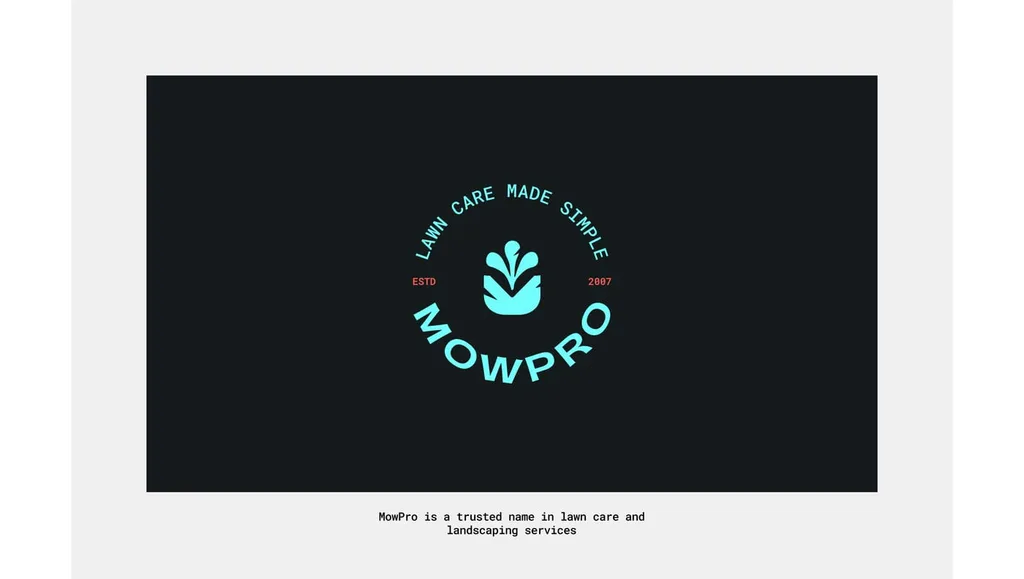
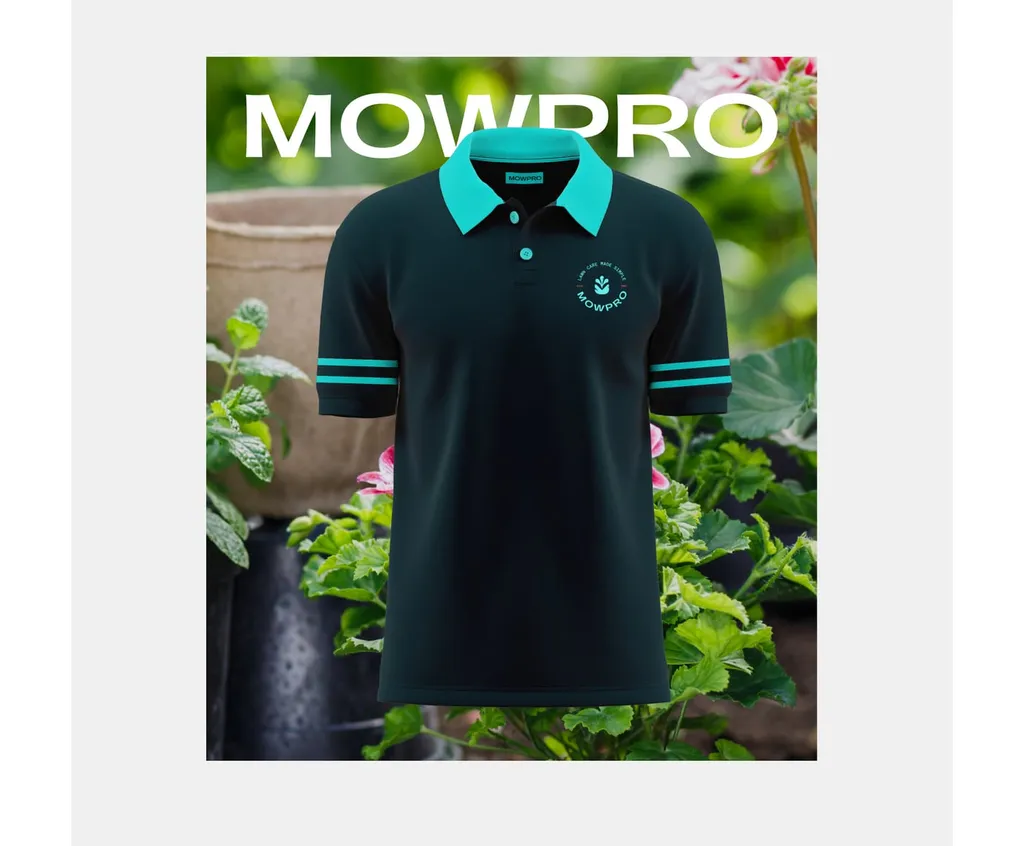
MowPro is a lawn care and landscaping company serving homes and businesses, from routine mowing to landscape design. Its identity is a leaf-shaped mark with a bold wordmark and a round badge reading “Lawn care made simple,” in light aquamarine, lime green, pinkish orange and dark jungle green, set in PP Gatwick, Inter and Roboto Mono. It runs on caps, polo shirts, tote bags, posters, a street banner, billboards and a website with services and customer reviews. The lesson for HVAC is a home-service crew brand that leads with a distinctive palette rather than a trade cliché, and a badge that works on a cap and a polo. See the MowPro case study.
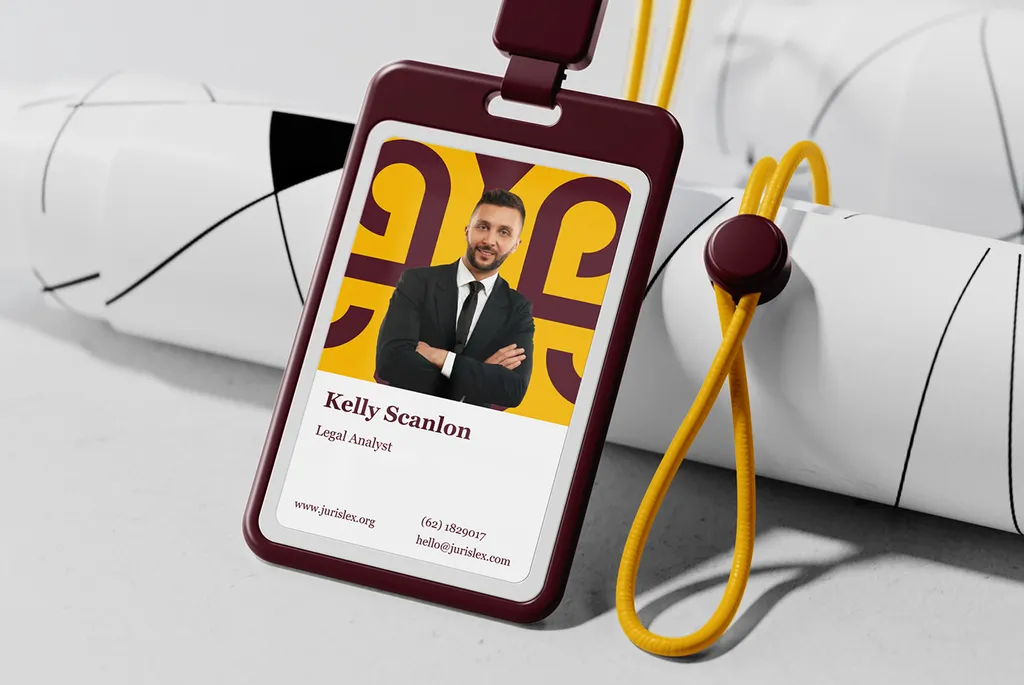
JurisLex is a Sydney law firm specializing in real estate law. It needed a distinctive brand in a competitive legal market and wanted to keep its personal service as it grew. The mark (mirrored scrolls around a central stem) and a serif wordmark were designed to work from a social profile to a hanging sign, in deep burgundy, warm cream and bright yellow, on business cards, an ID badge, posters, billboards and a responsive website. The lesson for HVAC is the established, local-professional look at every size, and the staff ID badge as part of the identity. See the JurisLex case study.
Common HVAC branding mistakes
- The snowflake and the flame. The trade’s symbol, shared with every competitor.
- Half blue, half red. The same split as the snowflake and flame, in color.
- A wrap with everything on it. Five services, three phone numbers, a photo of a family on a sofa, and a logo you can’t read at 40 mph.
- The license number squeezed into a corner. In some states it is required at a set size; plan for it.
- A different name on Google. “Smith HVAC Austin Best AC Repair” on the profile and “Smith Heating & Air” on the truck.
- Uniforms forgotten. A beautiful truck and a technician in a plain T-shirt.
- A logo that fails as a profile photo. The search result is often the first touchpoint.
Checklist: an HVAC brand that works on the street and on Google
- A logo that isn’t a snowflake, flame, thermometer or house
- One-color and reversed versions for vinyl, embroidery and invoices
- A monogram or short mark for caps, chests and profile photos
- A brand color your local competitors don’t use
- Truck layout: logo, services in a few words, one phone or web address, and a legal zone at the required size on both sides
- Uniforms, ID badges and leave-behinds in the same system
- Invoices, proposals and contracts with any required regulatory notice
- Business name identical on the truck, website, Google profile and stationery
- A review link or QR code on the leave-behind, and no incentivized or fake reviews
- License and insurance easy to find on the website and paperwork
How much does HVAC logo design and branding cost?
With me, an HVAC logo is $999 and a full brand identity $3,499 (see pricing); wraps, uniforms and printing are paid to your suppliers. I design remotely, with calls in your time zone. A logo design project takes one to two weeks, with three concepts shown on real uses (for HVAC: a truck side, a uniform, a Google profile photo and an invoice), three revision rounds and vector files for your wrap shop and embroiderer. A brand identity takes two to three weeks and adds strategy, color, type, voice and guidelines for the trucks, uniforms, signs and paperwork your scope covers. If you are unnamed or renaming, naming takes one to two weeks with a preliminary USPTO search; an established company with a known look can refresh it in two to three weeks. I don’t install wraps, run ads or file trademarks; your wrap shop, marketer and lawyer do, with clean files from me. The logo design process shows each step, and the ROI of branding article covers how to judge the return. If you are comparing designers, see how to hire a brand designer.
If your trucks look like everyone else’s, book a free 30-minute call and bring a photo of your truck next to two competitors’. We will start from there.
FAQ
What makes a good HVAC logo design?
One that is bold and simple enough to read on a moving truck, works in one color on vinyl and embroidery, survives as a small Google profile photo, and doesn’t rely on the snowflake, flame, thermometer or house that many HVAC companies use.
What should go on an HVAC truck?
Your logo large and clear, a few words on what you do, one phone number or web address, and any legal details your state requires. In California and Texas, that includes the business name and license number at a minimum size on the vehicle. Check with your licensing board.
Do I need my license number on my HVAC truck?
In some states, yes. California requires licensed contractors, HVAC included, to show the business name and license number on commercially registered work vehicles in at least 72-point type; Texas requires the company name and the affiliated licensee’s license number on both sides of work vehicles in letters at least two inches high. Other states differ.
What colors should an HVAC company use?
A color your local competitors don’t use, applied boldly to trucks and uniforms. Blue and red are the category defaults, especially together, so they rarely set you apart.
Should my HVAC company name include “HVAC” or my city?
It can, but descriptive names are weak trademarks, and Google doesn’t allow service or location words in a Business Profile name unless they are part of your real business name. Put the trade and the area in the tagline and on the truck instead.
How much does HVAC logo design cost?
With me, an HVAC logo is $999 over one to two weeks, with three concepts shown on a truck, a uniform and a Google profile photo. A full brand identity with guidelines is $3,499 over two to three weeks. Truck wraps, uniforms and printing are paid to your suppliers.
Sources
- FTC Consumer Advice: How To Avoid a Home Improvement Scam
- California Legislative Information: Business and Professions Code § 7029.6
- Cornell LII: 16 Tex. Admin. Code § 75.71, Responsibilities of the Contracting Company
- Google Business Profile Help: Guidelines for representing your business on Google
- FTC: Final rule banning fake reviews and testimonials (2024)