Franchise Branding: Keeping Every Location On-Brand
Franchise branding that holds at 5 or 50 locations: own the trademark first, then split guidelines from the standards manual, lock the templates, spec the vans and follow Google’s rules.

Summarize with AI
Key takeaways
- Franchise branding is a system, not a logo: a mark you own, rules a stranger can follow, files they can use, and a way to check the result.
- Secure the trademark before you sell the first franchise. In the US, Item 13 of the Franchise Disclosure Document asks about it, and an unregistered principal mark needs a warning.
- Split the documents: brand guidelines say how the brand looks and sounds; the brand standards manual says what every location must do, buy and display.
- Give franchisees templates with locked and editable zones, so local marketing is fast and still on-brand.
- Google treats every location as one business name: the same name, one profile per location, no city or service words added.
- Roll out a rebrand in phases, digital first, physical at planned replacement, with the rules written into the franchise agreement.
Franchise branding is the system that lets a location you have never visited look, sound and behave like your first one, whether you sell burgers or run a local service business with vans and crews. It has four parts: a name and mark you legally own, brand guidelines that define the identity, a brand standards manual that tells each franchisee what they must do, and ready-made files (templates, sign and vehicle specs, listing rules) they can use without a designer. If a new franchisee can open, wrap a van and post a local offer without calling head office, and the result still looks like you, the system works.
I’m Masuder Rahaman, a brand designer and the founder of Wolfpixel, where I lead the design team. I design brand identities for local service businesses and other founders, remotely, with calls in your time zone. I have not designed a franchise system yet, so the worked example below uses my closest work: MowPro, a lawn care brand, and ROMO Logistics, a fleet brand with guidelines. This article is general information, not legal advice. Your franchise lawyer decides what your agreement and disclosure document say.
What “franchise-ready” means for a brand
A brand that works for one location often breaks at the fifth. The founder carried the rules in their head; a franchisee has none of that. Test your brand against three questions:
- Can you protect it? If someone in another state already uses a similar name for the same service, every franchisee inherits the problem.
- Can a stranger apply it? Give your guidelines to someone who was never in the project. If they have to ask what to do, a rule is missing.
- Can you check it? Without a clear standard, “off-brand” becomes an argument instead of a fix.
Step 1: Own the name and mark before you franchise
Everything a franchisee pays for runs on your trademark. Make sure you own it before you sell it.
In the US, federal registration with the USPTO creates rights throughout the United States and its territories, a legal presumption that you own the mark, the right to use the ® symbol and the right to sue over the mark in federal court, according to the USPTO. A franchise network is, by design, a national bet on one name, so those rights matter more for you than for a single shop.
The FTC Franchise Rule sets out a disclosure document with 23 items for prospective franchisees. Item 13 covers trademarks. Under 16 CFR 436.5(m), you must:
- Identify your principal trademarks and give registration details for any registered with the USPTO.
- Disclose pending applications if a principal mark is not registered.
- Include a prescribed warning if a principal mark is not on the Principal Register, telling buyers the mark lacks many of the legal benefits of a federally registered one and that they may have to change to another mark.
- Disclose disputes and limits: material decisions by the USPTO or courts, pending litigation, and agreements that significantly limit your right to use or license the mark.
- Explain your obligations to protect the franchisee’s use of the marks, and the franchisee’s rights and obligations if you require a change.
That warning is a poor start to a sales conversation. Search and file early, and design the logo you intend to register.
Two more items touch the brand. Item 8 covers what franchisees must buy from you, your designee, your approved suppliers or to your specifications, which is where sign makers and uniform suppliers often sit. Item 11 covers advertising: the system-wide program, any local or regional advertising cooperative, and when franchisees may use their own advertising material. Your brand system should match what those items promise.
What I do and what your lawyer does. In a brand naming project I run name ideas, domain and social checks, and a preliminary trademark search with the USPTO. That screens out obvious conflicts. It is not a clearance opinion. Your trademark lawyer runs the full search and files the application; I hand over clean logo files for it.
If you plan to franchise in Saudi Arabia. The Saudi Franchise Law (Royal Decree No. M/22, with an English translation on the Ministry of Investment’s site) requires franchise agreements and disclosure documents to be registered with the Ministry (Article 6). The disclosure document goes to the franchisee at least 14 days before the agreement is signed or any payment is made, whichever comes first, and must be in Arabic or come with a certified Arabic translation (Article 7). The law defines the franchise business model to include the display of the business trademark, and lists the franchisee’s obligation to preserve the identity of the franchise among the agreement’s contents. Trademarks in the Kingdom are registered with SAIP, through your lawyer. For Gulf locations, I design the Arabic and English versions of the name and logo together, at the same package price.
Brand guidelines vs brand standards manual: what goes in each
Franchisors often have one document trying to do two jobs. Split them. Brand guidelines describe the identity. The brand standards manual tells each location what it must do with it, and is usually referenced by the franchise agreement.
| Brand guidelines | Brand standards manual | |
|---|---|---|
| Question it answers | How does the brand look and sound? | What must every location do, buy and display? |
| Who writes it | The brand designer, with you | The franchisor’s operations team and lawyer, with the designer’s specs inside |
| Typical contents | Logo versions, clear space and minimum sizes; color values for screen and print; typography; imagery and icons; voice and tone; examples on real touchpoints | Required signage and where it goes; vehicle wrap and uniform standards; approved suppliers; local marketing rules and the approval process; listing and review rules; inspection and fix timelines |
| Language | “Use the badge on dark backgrounds.” | “Every vehicle must carry the approved wrap within 30 days of purchase.” (your number, set by your team) |
| Who reads it | Designers, sign shops, printers, agencies | Franchisees, area managers, auditors |
| How it changes | When the brand changes | When operations or rules change |
Keep one dated master version of each, so no location works from an old PDF.
I design brand guidelines as a PDF anyone can read, PowerPoint and Illustrator files your team can open, and a Figma library designers build from. For a franchise, the PowerPoint matters: most franchisees and their local staff will never open Figma. If you only need the guidelines for a brand you already have, see brand guidelines; for a smaller team’s version, read brand guidelines for a small team.
Local marketing templates franchisees can edit without breaking the brand
Franchisees need local flyers, offers and hiring posts. If every piece needs a designer, they improvise, and the brand drifts. The fix is templates with locked and editable zones.
| Zone | What it holds | Who controls it |
|---|---|---|
| Locked | Logo, colors, type styles, layout grid, legal lines (trademark notice, license number slots) | The franchisor |
| Editable from a list | Approved photos, approved offer formats, approved headlines | The franchisee picks; the franchisor curates the list |
| Free local fields | Town name, address, phone, dates, a local partner’s name | The franchisee |
Which templates to build first depends on your business, but for most service franchises the first set is:
- A grand opening kit. A flyer, a door hanger, social posts and a sign for the window or site.
- Offer templates. One layout for a percent-off offer, one for a free add-on, one for a seasonal service.
- Hiring. A job post and a “now hiring” social graphic.
- Community. A sponsorship banner and a partner logo lockup, with a rule for whose logo leads.
- Review request. A leave-behind card or invoice footer asking for an honest review.
Make them in tools franchisees already use, like PowerPoint or a shared template with locked layers.
Signage, vehicles and uniforms: specs, not pictures
A beautiful render of a branded van is not a spec. A sign shop in another state needs numbers and files.
For each physical item, the guidelines should give:
- Artwork files in vector format, named so a vendor can find the right one.
- Color values for print and for vinyl or paint, plus an instruction to proof on the real material before full production.
- Layouts with measurements: logo size and position, clear space, and where the phone number, web address and any license number go.
- Variations by size: a large box truck, a small van, a pickup; a pylon sign, a fascia, a window decal.
- Uniform rules: garment colors, logo placement and size on a polo, a cap and a jacket, and whether it is embroidered or printed.
- The local panel: one reserved area for location-specific details, the same on every vehicle and sign.
Check local rules before you lock a layout. Sign size and lighting are set by local permits, and some trades have state rules about license numbers on vehicles and ads. My local services page shows examples for contractors in California and Texas. Your sign vendor and lawyer confirm what applies in each location.
If franchisees must use approved vendors, give those vendors the same files and keep the list in the standards manual. That also keeps the brand consistent with what your disclosure document says about required purchases.
Google Business Profile rules for franchise locations
For many service businesses, the Google profile is the first thing a customer sees. Google’s guidelines for representing your business set rules that decide part of your brand system for you:
- One name for every location. Google asks that all locations in the same country use the same name, with two exceptions: distinct sub-brands or types of business named consistently, and locations that consistently use a different name on their storefront, website or stationery.
- No extra words in the name. City names, service descriptions and store codes go in other fields, not the business name. “Acme Plumbing” is right; “Acme Plumbing Austin Drain Cleaning” is not.
- Franchisees may use the brand name. An authorized, fully dedicated seller of a brand, which Google says is sometimes known as a franchisee, may use the underlying brand name.
- One profile per business location. No duplicates.
- Service-area businesses should have one profile for the central office or location, with a designated service area. Separate locations with separate service areas and separate staff can each have a profile.
- The same category for locations that provide the same service.
- A local phone and location website. Google prefers a local number over a central call center line, and a phone number or website that represents the individual location rather than a redirect.
For networks with storefronts, Google offers bulk verification for 10 or more profiles from the same business. Service-area businesses can’t use it, and neither can agencies with more than one business in one account.
So keep the name short enough to work as a profile name, design a logo that reads in a small circle, and write the naming and category rules into the standards manual.
An approval workflow that doesn’t slow local marketing
Most drift comes from a franchisee who needed a flyer by Friday. Make the on-brand path the fast one, with three tiers:
- Pre-approved: no review. Templates used as designed, with only the free local fields filled in. The franchisee publishes.
- Light review. A template with a choice from the editable lists, or a new photo. One named person at head office reviews it within a set time.
- Full review. Anything custom: a new layout, a co-branded piece, a sponsorship with another logo, a vehicle that isn’t in the specs. Brand and, where claims or offers are involved, legal review.
Write the rules down:
- One inbox or form for requests, not texts to the founder.
- A response time your team can keep, and what happens if it is missed.
- One asset library with the current logo, templates and photos, so nobody downloads the logo from your website.
- Version dates on every file, and a notice when something is replaced.
- A periodic check of listings, social pages and vehicles, with a simple fix request, not a penalty first.
Rolling out a rebrand across locations
Changing the brand across 20 locations is a program, and every location has signs, vehicles and stock to replace. If you are deciding how far to go, read rebrand or refresh first. A refresh keeps recognition and fixes what looks dated, which is often enough for a network with signs on the street. A full rebrand is an audit, new positioning, a new logo system, messaging and guidelines; how to rebrand a business sets out the steps. A new name is a separate project; see how to rename a company.
A rollout plan I would put in front of franchisees:
- Pilot one or two locations. Test the signs, vehicles and templates in the real world before you order for everyone.
- Digital first. The website, social profiles and templates change quickly and cheaply.
- Google profiles carefully. Google lets some businesses keep a profile through a minor name change, as long as the proper nouns, services and category in the name stay the same; a bigger change can mean the business is treated as a new one. Plan the timing and check the current guidelines before you change any name.
- Physical at replacement. Uniforms at the next order, vehicles at the next wrap, signs on a schedule, unless the agreement says otherwise.
- One cutover date for print. Stop ordering old stationery and leave-behinds on a set day.
- An updated manual and disclosure document. If the principal mark changes, your lawyer updates Item 13 and the agreements.
Who pays and how fast locations must change belongs in the franchise agreement, decided by you and your lawyer.
Worked example: my closest work (not franchise projects)
Neither project below is a franchise. They show the parts a franchise system needs: a mark that works on uniforms and vehicles, and guidelines for where the brand is seen.
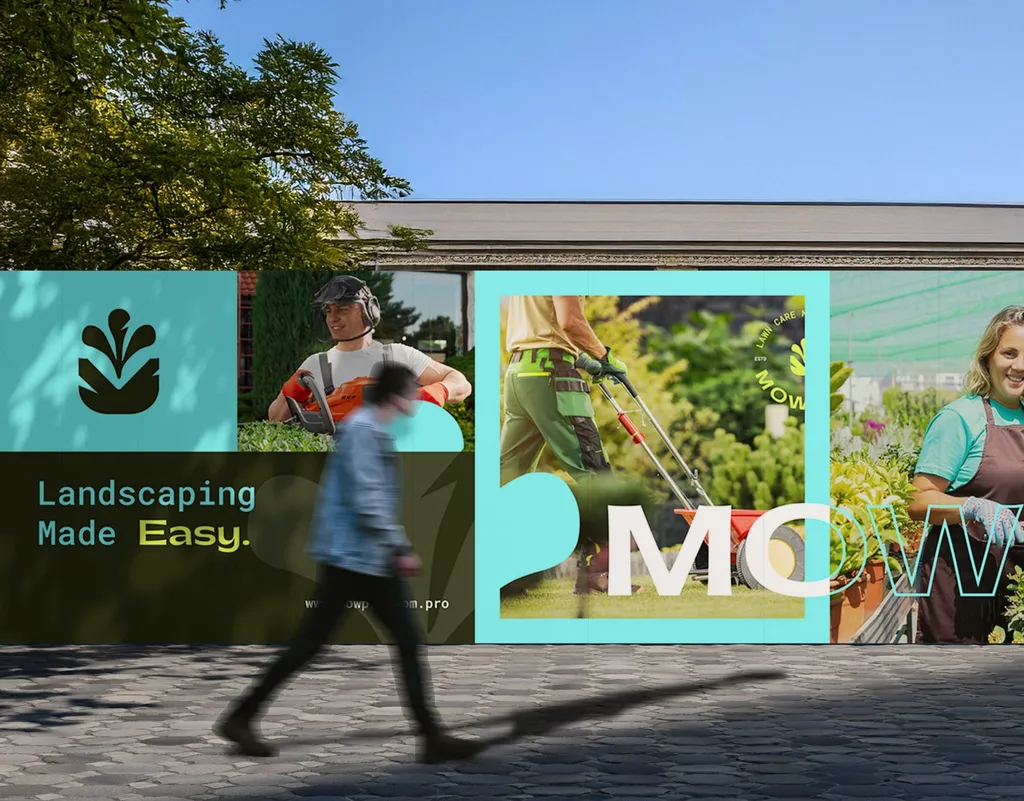
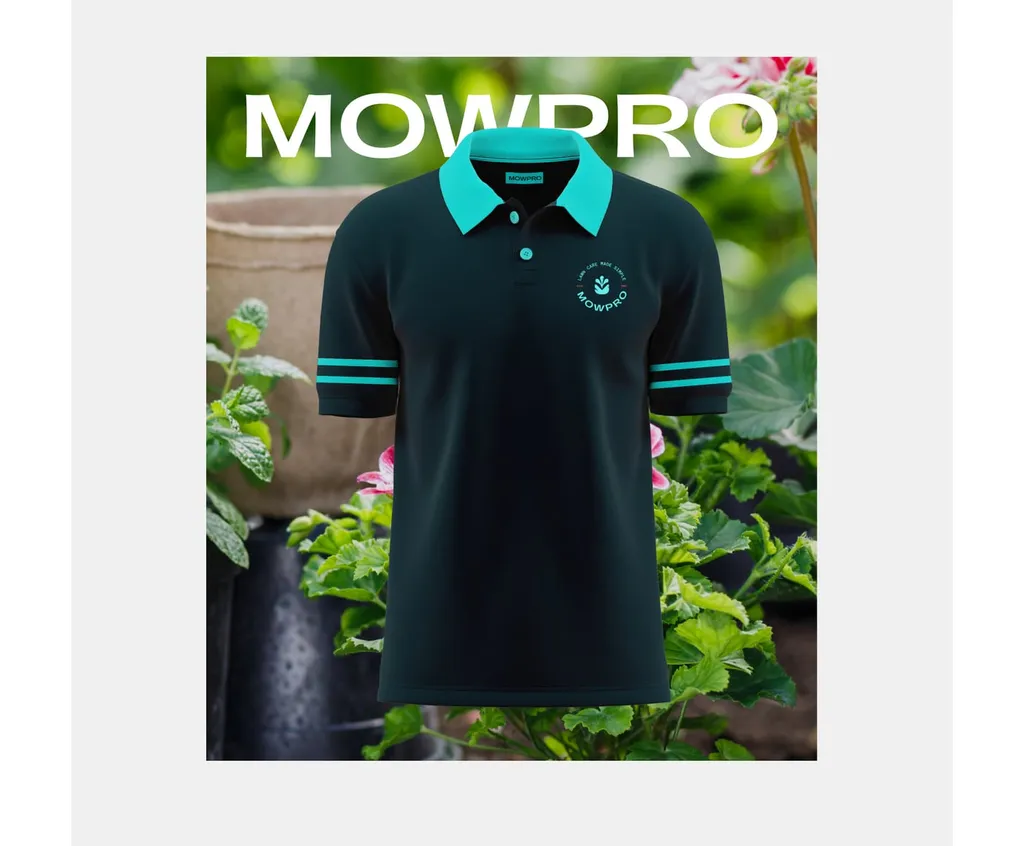
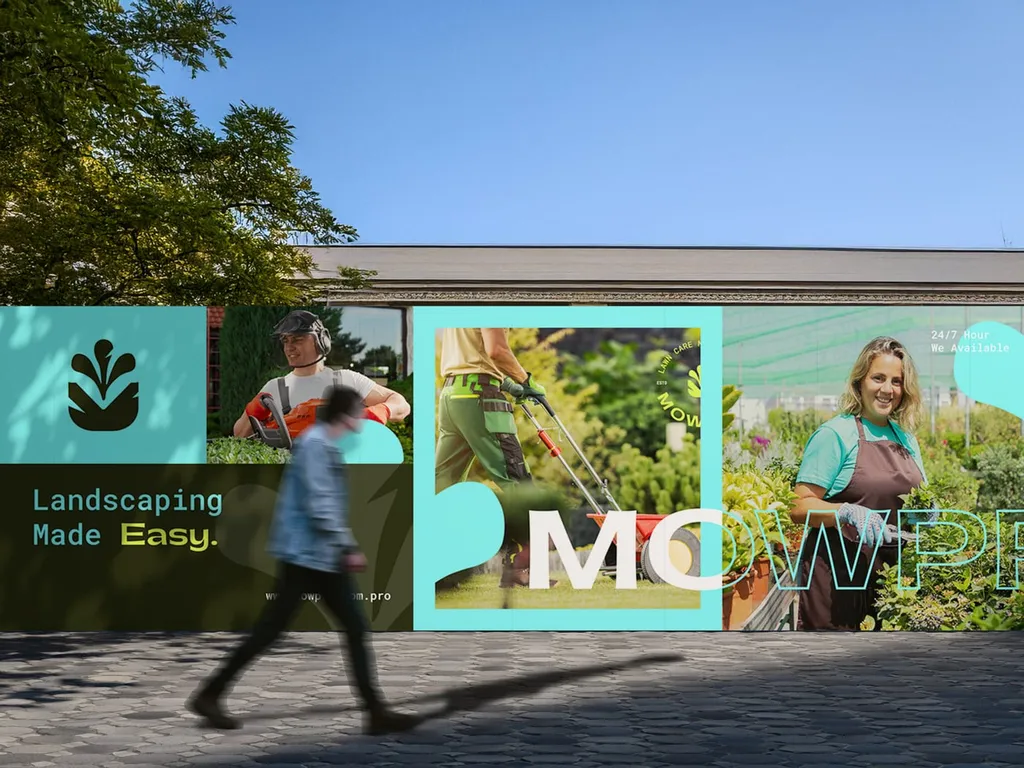
MowPro: a local service brand built to be applied. MowPro is a lawn care and landscaping company for homes and businesses, from routine mowing and edging to landscape design, hardscaping and irrigation. For MowPro’s brand identity we designed a leaf-shaped mark, a bold wordmark and a round badge, “Lawn care made simple,” in light aquamarine and lime on dark jungle green. The identity runs onto caps, polo shirts and tote bags the team wears on the job, plus billboards, posters, a street banner, social posts and a website. A franchise would hand the same set of parts to every new location.
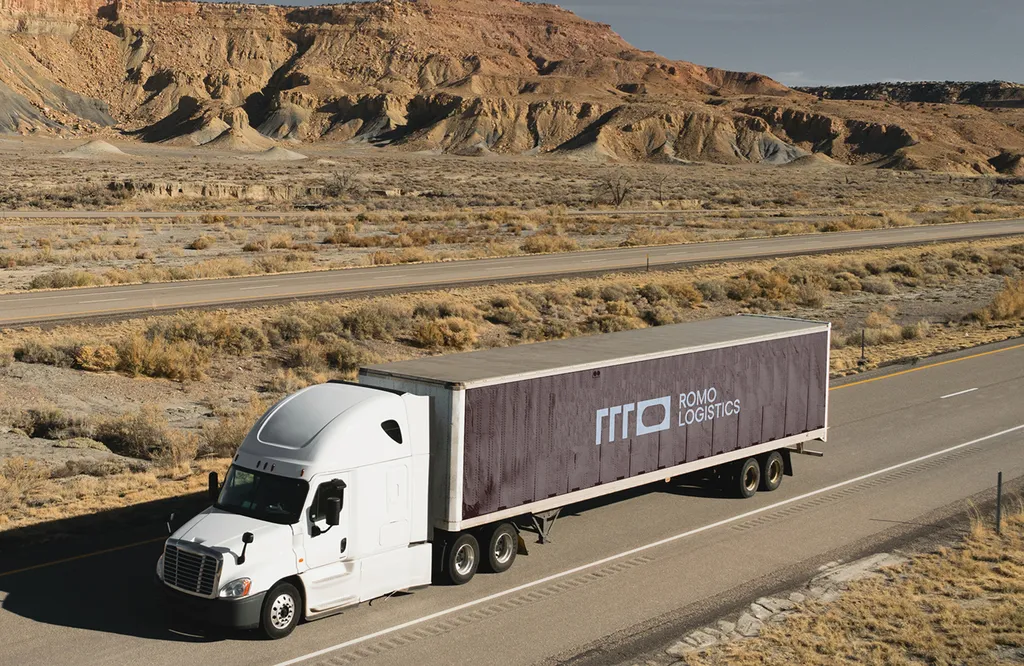
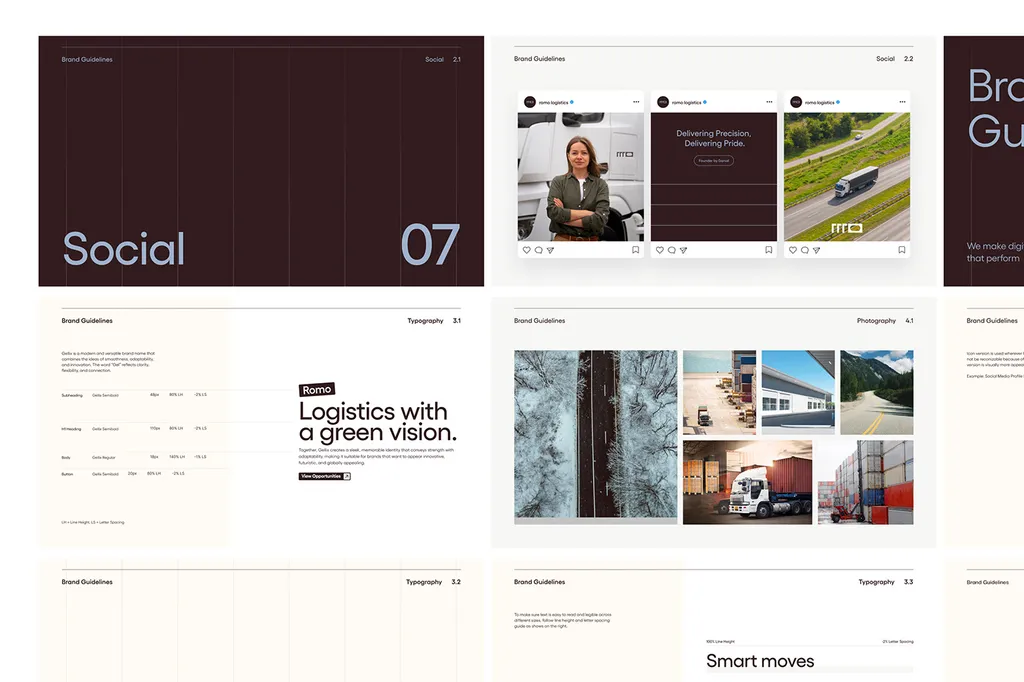
ROMO Logistics: guidelines for a fleet. ROMO Logistics connects businesses and people across borders with transport. For ROMO’s brand identity we designed a geometric monogram on a strict grid, a palette of reddish brown, rock blue and ivory white with one sans in four weights, and guidelines that include pages for social media. The brand runs on truck livery, warehouse signs, hoardings, packaging, stationery, and work jackets and vests. The case study’s own line is that warehouses, signs and hoardings look the same in any country, which is the franchise problem in a different industry.
What I deliver and what your lawyer and operations team own
| Area | What I deliver | What your lawyer or operations team owns |
|---|---|---|
| Name | Name ideas, a shortlist, domain and social checks, a preliminary USPTO search (naming) | The full clearance search and legal opinion |
| Trademark | Clean logo files for the application | Filing with the USPTO (or SAIP, or the UAE Ministry of Economy and Tourism), and Item 13 of your disclosure document |
| Identity | Logo system, color, type, imagery, voice (brand identity) | Approving it and making it the standard |
| Guidelines | PDF, PowerPoint and Illustrator files and a Figma library | Referencing them in the standards manual |
| Physical items | The identity applied to the vehicles, signs and uniforms your scope covers, with print-ready files | Permits, vendor selection, production and installation |
| Local marketing | The templates your proposal includes | The approval workflow, staffing and the ad fund rules in your disclosure document |
| Brand standards manual | Brand specs for it | Operations rules, compliance and enforcement |
| Rebrand | Audit, positioning, a new logo system, messaging, guidelines (rebranding) | The rollout schedule, the cost split and agreement changes |
Common mistakes in franchise branding
- Selling franchises before the mark is secured. A name conflict found at location 12 costs every location.
- A name that only works in one town. “Westside Plumbing” stops making sense at the first location on the east side, and Google won’t let you add a town to the name.
- A guidelines PDF and nothing else. Rules without templates make every franchisee a designer.
- No local panel. Without a reserved spot for local details, each location squeezes its phone number somewhere different.
- Approving everything by hand. The founder becomes the bottleneck, and franchisees learn to skip the queue.
- A rebrand with no rollout plan. Half the network on the new look, half on the old, for years.
Franchise brand system checklist
- The name screened, a full trademark search done, the application filed by your lawyer
- A logo designed for the sign, the vehicle, a uniform and a small profile image
- Brand guidelines: logo, color for print and vinyl, type, imagery, voice, examples
- Guidelines in PDF, PowerPoint and a library designers use
- A brand standards manual that references the guidelines and sets the rules
- Vehicle, sign and uniform specs with measurements and a local panel
- An approved vendor list with the current files
- Local marketing templates with locked and editable zones
- Google profile naming, category and phone rules written down
- A three-tier approval workflow with a response time
- One asset library with dated files
- Rebrand terms in the franchise agreement
- Arabic and English versions designed together, if you franchise in the Gulf
How I work with franchisors
If you are preparing to franchise a local service business, or your brand is drifting across locations, here is what the work looks like with me.
- Brand identity: $3,499, 2–3 weeks. Logo system, color, type, imagery and voice, with brand guidelines included as PDF, PowerPoint and Illustrator files and a Figma library. Unlimited revisions within the agreed scope.
- Premium: $6,999, 4–6 weeks. Everything in brand identity, plus an AI-ready brand system and website design in Figma (design only, no build).
- Brand guidelines on their own: 1–2 weeks. For an existing brand that needs documenting. Quoted after a free 30-minute call, as a fixed written proposal.
- Rebranding: 3–4 weeks. Quoted the same way, with unlimited revisions within the agreed scope.
- Brand naming: 1–2 weeks. Quoted the same way.
Templates and vehicle, sign and uniform applications are scoped in your proposal. Arabic and English versions of the name, logo and type are included at the same package price. You own all the final files. See pricing for the packages.
Book a free 30-minute call and bring your current logo files, photos of two or three locations (storefronts, vehicles and uniforms), the number of locations you have and plan to open, and whether your trademark is filed. We will start with what has to be locked before the next franchise is sold.
FAQ
What is franchise branding?
Franchise branding is the system that keeps every location consistent: a trademark you own, brand guidelines, a brand standards manual, and templates and specs franchisees can use without a designer. The goal is that a customer can’t tell which location is the original.
Do I need a registered trademark before I franchise?
Talk to your lawyer, but plan for it. In the US, Item 13 of the Franchise Disclosure Document asks about your principal trademarks, and if a principal mark is not on the USPTO’s Principal Register, the document must carry a warning that the mark lacks many of the legal benefits of a registered one. Searching and filing early avoids that and protects every franchisee’s investment.
What is the difference between brand guidelines and a brand standards manual?
Brand guidelines define how the brand looks and sounds: logo, color, type, imagery and voice. A brand standards manual tells each franchisee what they must do with it: required signs, vehicle and uniform standards, approved suppliers, local marketing rules and approvals. The manual usually references the guidelines.
Can franchisees make their own local marketing?
Yes, if you give them templates with locked zones (logo, colors, layout, legal lines) and editable fields (town, offer, photo, phone), and a clear approval process for anything custom. That keeps local marketing fast and on-brand.
Can each franchise location add its city to the Google Business Profile name?
No. Google’s guidelines ask that all locations in a country share the same name and that location details go in other fields, not the business name. Google does allow an authorized franchisee to use the brand name.
How much does franchise branding cost?
With me, a brand identity with guidelines is $3,499 and the Premium package is $6,999. Guidelines for an existing brand, a rebrand, naming and templates are quoted after a free 30-minute call, as a fixed written proposal.
Sources
- USPTO: Why register your trademark?
- 16 CFR 436.5: Disclosure items (Items 8, 11 and 13), Cornell LII
- Google Business Profile Help: Guidelines for representing your business on Google
- Google Business Profile Help: Verify Business Profiles in bulk
- Ministry of Investment of Saudi Arabia (MISA): Franchise Law, Royal Decree No. M/22 (English translation, PDF)