What Is a Brand Designer? And How One Differs From a Graphic Designer
What is a brand designer? The person who designs a brand’s whole visual system and its rules. How the role differs from a graphic designer, and when to hire.

Summarize with AI
Key takeaways
- A brand designer designs the system, and a graphic designer designs pieces inside it. Many people do both, and many brand designers started as graphic designers.
- Brand design isn’t a separate official occupation in the US. O*NET files “Brand Designer” as a reported job title under graphic designers.
- The difference is judgment, not software: research first, one clear idea, type and color that hold up at every size, and rules other people can follow.
- Hire a brand designer when you need an identity, a rebrand or a brand that has drifted apart. Hire a graphic designer when the brand exists and you need more materials.
- Ask to see guidelines and applications in a portfolio, not just logos. That’s the clearest sign of brand design work.
A brand designer is the designer who creates a company’s visual identity as a system: the logo family, color, type, imagery and the rules for using them, written down as brand guidelines. A graphic designer usually makes individual pieces inside that system, such as a brochure, an ad or a deck. In the US occupation database, “Brand Designer” is listed as a job title under graphic designers.
| Role | Main question and output | When you hire one |
|---|---|---|
| Brand designer | What should this brand look like, everywhere? Sets the rules: logo family, color, type, imagery, guidelines | New business, rebrand, inconsistent brand |
| Graphic designer | What should this piece look like? Usually follows the rules: ads, brochures, social posts, decks, layouts | Brand exists, you need materials |
| Brand strategist | What should this brand stand for, and to whom? Sets the strategy the rules come from: positioning, audience, messaging, naming briefs | Unclear positioning, new market, big change |
I’m Masuder Rahaman, a brand designer and the founder of Wolfpixel, where I lead a design team for founders in the US and the Middle East. I design logos and brand identities, and “brand designer” is the title on my own work, so I have a stake in how it’s defined. This article is for founders deciding who to hire. It covers what a brand designer does, how the role differs from a graphic designer and a strategist, how the US classifies it, and what the work looks like in practice.
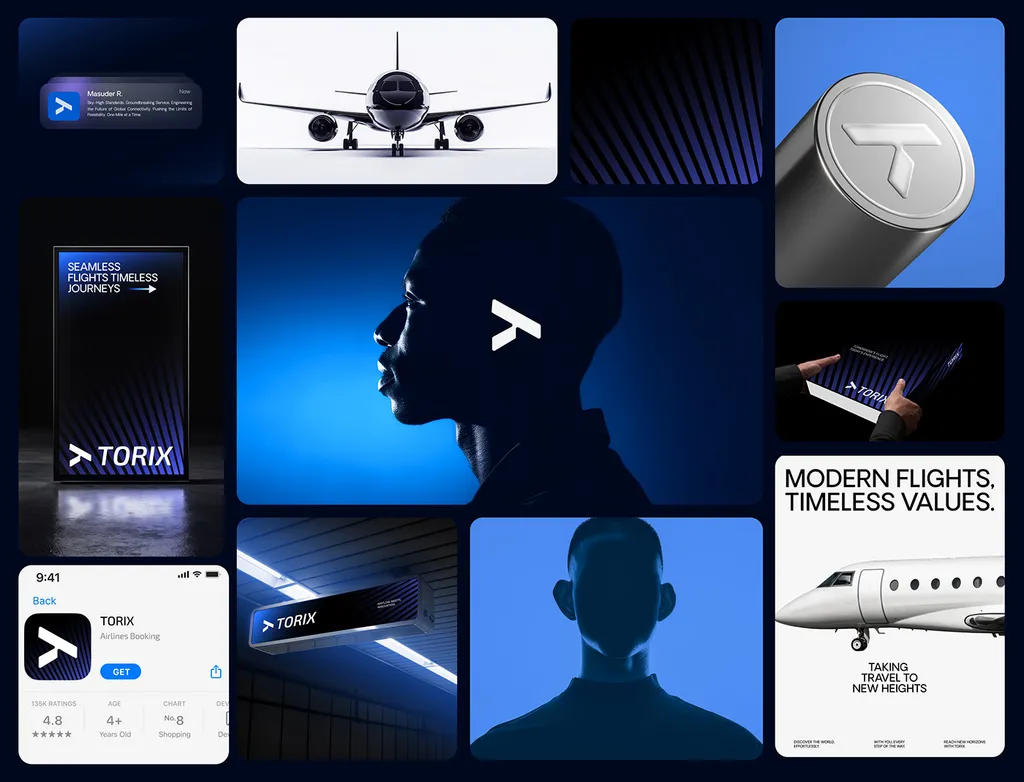
What is a brand designer, and what do they do?
A brand designer is a designer who builds and maintains a brand’s visual identity. CareerExplorer describes the role as one that “focuses on developing the visual identity of a brand,” and lists the duties: logos, palettes, typography and iconography, brand style guides, assets for websites, ads and packaging, and running rebrands.
The defining word is system. A brand designer is judged less on one logo than on whether the brand looks like itself everywhere: on a 16-pixel favicon, a pitch deck, a shopfront and a social post, made by different people months apart. That’s why the main deliverable is usually two things together: the identity, and the guidelines that let other people use it correctly.
Some brand designers go further into strategy (positioning, audience and messaging). The UK studio Patten Design describes the role in three layers: strategy, identity and application. Others focus on the identity and work from a strategy someone else wrote, so ask which kind you’re talking to.
What a brand designer typically makes:
- A logo family: primary logo, wordmark, symbol or monogram, horizontal and stacked versions, one-color and reversed files
- A color palette with values for print and screen
- Typography: typefaces, weights and how they’re used
- Imagery direction: photo style, illustration, icons, patterns
- Applications: the identity shown on real items, such as cards, signs, packaging, app screens and social templates
- Brand guidelines: the rules, with right and wrong examples
For the full list of parts, see what a brand identity includes.
Brand designer vs graphic designer: what’s the difference?
The roles overlap, and plenty of designers do both. The difference is the question each one answers.
A graphic designer usually solves a specific communication problem, such as a launch ad, a brochure or a conference banner. A brand designer solves the problem behind all of them: what everything should look like so that people recognize the company before they read its name. Patten Design puts it as an analogy: the brand designer draws the blueprint, and the graphic designer furnishes the rooms.
Kelly Wittman, a brand strategist and designer, adds two practical differences. With a graphic designer, the business owner usually leads the creative direction and turnaround is quicker. With a brand designer, the designer usually leads the visual direction. She also notes that many brand designers start as graphic designers, so a title doesn’t always tell you what someone can do.
| Compare | Brand designer | Graphic designer |
|---|---|---|
| Starts from | Research: your business, audience, competitors | A brief for one piece |
| Main deliverable | An identity system plus guidelines | Finished pieces: layouts, ads, documents |
| Who leads the look | The designer, from the strategy | Usually the client, within the brand |
| Pace | A defined project with concepts and rounds | Fast, often ongoing |
| How it’s judged | Consistency across every touchpoint over years | Whether this piece communicates |
| Typical portfolio | Case studies: logo, type, color, applications, guidelines | Many separate pieces across many clients |
| Typical pricing | Fixed project fee | Per piece, hourly or retainer |
In practice, you usually need both, in order. The brand designer creates the identity and the rules. A graphic designer, in-house or freelance, then applies those rules to the steady stream of materials a business needs. Good guidelines make that second hire cheaper and faster.
What category does brand design fall under?
Officially, graphic design. In the US, the occupation database O*NET lists “Brand Designer” as a reported job title under Graphic Designers (27-1024.00), next to titles such as Graphic Artist and Publications Designer. One of that occupation’s task statements is to develop graphics for “company logos.”
So when the US government counts brand designers, it counts them as graphic designers. These are the Bureau of Labor Statistics figures for the whole occupation:
| Graphic designers (US, BLS) | Figure |
|---|---|
| Median pay | $62,960 a year (May 2025) |
| Jobs | About 253,100 (2025) |
| Projected change | −2% from 2025 to 2035 |
| Openings | About 16,000 a year, mostly from replacing workers who leave |
| Typical entry-level education | Bachelor’s degree, plus a portfolio |
| Largest employer group | Self-employed, about 20% of jobs |
These figures cover all graphic designers, not brand designers alone. BLS doesn’t publish a separate figure for brand designers, so treat any brand-designer salary you see as an estimate, usually drawn from job ads.
In practice, brand design sits where design meets marketing. The craft is graphic design: type, color, layout and drawing. The purpose is a marketing one: recognition and trust over time. WolfPack Advising argues that brand design uses graphic design as a tool but goes deeper, and ManyPixels calls design a subset of branding. Both describe the same overlap from different sides. For a hiring decision, the label matters less than the portfolio.
What makes a good brand designer?
Any graphic designer has the software. What separates a brand designer is a set of habits you can check for:
- Asks before drawing. Who buys from you, who you compete with, where the brand will appear in its first year, who makes the final decision. A designer who sends logos before asking questions is decorating, not designing a brand.
- Works from one idea. The identity carries one clear idea, agreed in writing. The colors, type and imagery all follow from it.
- Thinks in families, not single marks. The logo comes with a small version, a one-color version and a reversed version, tested at real sizes, from a favicon to a sign.
- Makes type and color decisions that hold up. Contrast that works on screen and in print, typefaces licensed for the uses you need, a palette short enough to stay consistent.
- Shows the brand in use. Concepts are presented on real items (an app icon, a card, a sign, a social post), because that’s where a brand succeeds or fails.
- Writes rules other people can follow. Guidelines with clear do’s and don’ts, so a freelancer or an AI tool can produce on-brand work without the original designer in the room.
- Explains the reasoning. Every choice comes with a why that ties back to your business, not to taste.
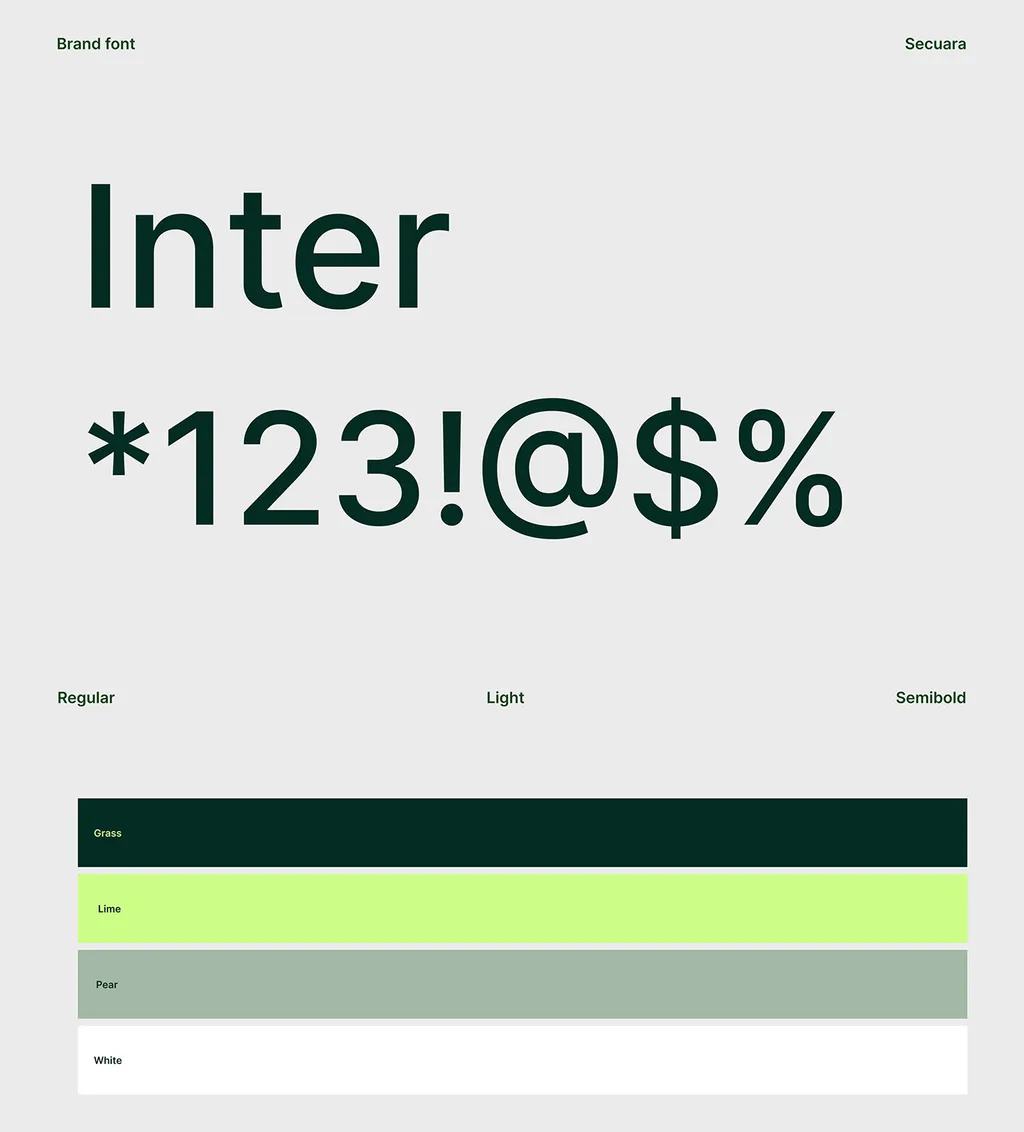
The Secuara cybersecurity identity shows what points 4 and 6 look like on paper: one typeface, Inter, in three named weights, and a palette of four named colors (Grass, Lime, Pear and White). Anyone applying the brand works from the same few choices.
When do you need a brand designer, and when a graphic designer?
| Your situation | Who to hire |
|---|---|
| New business, no logo or a placeholder | Brand designer |
| Your materials all look different from each other | Brand designer (to set the system), then a graphic designer |
| Raising money, entering a new market or the business has changed | Brand designer, possibly with a brand strategist |
| You have guidelines and need ads, social posts, a brochure | Graphic designer |
| You need a steady flow of design every month | Graphic designer, in-house or on retainer |
| You need positioning and messaging, not visuals | Brand strategist |
| Several markets, naming, website build and campaign at once | Possibly an agency; see brand designer vs branding agency |
If you’ve decided you need a brand designer, my step-by-step guide on how to hire a brand designer covers the brief, the shortlist, the questions and the contract.
How I work as a brand designer
My main service is brand identity: $3,499 for 4 concepts, the brand identity and brand guidelines, with unlimited revisions within the agreed scope, in 2–3 weeks. The process runs Discovery → Strategy → Identity → Handover:
- Discovery: a call, an audit of your current brand, and market research.
- Strategy: the idea the brand should carry, with creative directions.
- Identity: concepts shown on real uses, then feedback and final polishing.
- Handover: guidelines as PDF, PowerPoint and Illustrator files plus a Figma library with source files. You own all final files.
There are weekly check-ins in your time zone. If you only need a logo, the logo package is $999 for 3 concepts and 3 revision rounds in 1–2 weeks. The Premium package ($6,999, 4–6 weeks) adds an AI-ready brand system and website design in Figma. Website build, ad production and trademark filing aren’t included in any package.
Not sure whether you need a brand designer?
If you can’t tell whether you need a brand designer, a graphic designer or a strategist, compare what each delivers in brand consultant vs strategist vs designer, or book a free 30-minute call in your time zone, and I’ll tell you which one your situation needs. The identity package and what it includes are on the brand identity page.
FAQ
What does a brand designer do?
A brand designer creates a company’s visual identity as a system: the logo family, color palette, typography, imagery style and applications, plus brand guidelines that explain how to use them. Some also do strategy work such as positioning and messaging.
What is the difference between a brand designer and a graphic designer?
A brand designer designs the identity and its rules; a graphic designer usually designs individual pieces, such as ads, brochures and decks, within those rules. Many designers do both, and many brand designers started as graphic designers.
What category does brand design fall under?
Officially, graphic design. The US O*NET database lists “Brand Designer” as a reported job title under Graphic Designers (27-1024.00). In practice it sits where design meets marketing, because its purpose is recognition and trust over time.
What makes a good brand designer?
A good brand designer researches your business before drawing and builds the identity around one clear idea. Look for a portfolio with logo families, real applications and guidelines, not just logos, and for reasons tied to the business behind every choice.
Do I need a brand designer or a graphic designer?
If you don’t have a brand yet, or your materials don’t look like one company, start with a brand designer. If you already have a clear identity and guidelines and need more materials, a graphic designer is the right hire.
How much does a brand designer cost?
It varies widely by scope and experience. My own prices are fixed: $999 for a logo, $3,499 for a brand identity with guidelines, and $6,999 for the Premium package. Other scopes get a fixed written proposal after a free call.
Sources
- US Bureau of Labor Statistics: Graphic Designers, Occupational Outlook Handbook (last modified 29 October 2026)
- O*NET OnLine: Graphic Designers, 27-1024.00
- CareerExplorer: What does a brand designer do?
- Patten Design: What is a brand designer?
- Kelly Wittman: Brand designer vs graphic designer
- WolfPack Advising: Is brand design under graphic design?
- ManyPixels: Branding vs graphic design (4 January 2026)