What Does a Brand Strategist Do, and When Do You Need One?
What a brand strategist does, what you get at the end, how the role differs from a brand designer, what it costs, and the signs your company needs one now.

Summarize with AI
Key takeaways
- The output is a short written strategy, not a logo: positioning, audience, key messages with proof, and voice.
- A brand designer turns that strategy into a logo, colors, type and a visual system. Small teams often get both from one person or studio.
- Salary figures disagree, even between two Indeed pages. Compare several sources before you budget.
- For a startup, a fixed-scope project usually makes more sense than a full-time hire.
- Strategy is cheapest to change before design starts, and most expensive once a website and deck are built around the wrong message.
A brand strategist decides who your company is for, what it should be known for and what it should say, before money goes into design and marketing. The work turns research into a few written decisions: a positioning statement, key messages with proof, a brand personality and a voice. You need one when your team can’t explain the company the same way twice, when you’re about to spend on a new identity or website, or when you’re entering a new market.
I’m Masuder Rahaman, a brand designer and the founder of Wolfpixel, where I lead the design team. Strategy is the second step of every identity project I run, and I also sell it on its own as a brand strategy project. This article is for founders deciding whether to hire a brand strategist: what the work produces, how the role differs from a designer, what it costs and what to ask before you sign.
What does a brand strategist do?
A brand strategist turns what customers, competitors and your own team say into decisions the whole company can act on. Indeed’s career guide lists 13 duties, from target audience research and brand positioning to buyer personas, competitor research and regular brand audits (Indeed). For a founder, it’s more useful to see what each piece of work produces:
| What they do | Question it answers | What you get |
|---|---|---|
| Discovery with founders and decision-makers | What does the brand need to do for the business in the next 12–24 months? | Agreed goals and a short list of decisions to make |
| Audience research | Who buys first, why, and in what words? | One or two audience profiles, with problems in the buyer’s own language |
| Competitor and alternative review | Who do prospects compare you with, including doing nothing? | A map of what competitors already claim, and the gap |
| Positioning | What should you be known for, and why should anyone believe it? | A positioning statement with its proof |
| Messaging | What should every page, pitch and sales call repeat? | Three to five key messages, each with proof |
| Personality and voice | How should the brand sound and feel? | Personality traits and a voice guide with do and don’t examples |
| Brand architecture (larger companies) | How do the company, products and sub-brands relate? | A naming and hierarchy decision |
| Measurement | How will you know the strategy is working? | A few signals to track and a review date |
Research is what makes the rest credible. The U.S. Small Business Administration’s guide to market research and competitive analysis asks for the same things a good strategist checks: who your customers are, which businesses compete for them, their strengths and weaknesses, and your window of opportunity.
The role can reach well beyond marketing. One strategist with 25 years in the field wrote that only about 5% of his work ended up as an advertising campaign; the rest was positioning, portfolio and architecture work, culture change and measurement (Baron Sauvage). A startup project is smaller, but it still shapes decisions in sales, product and hiring.
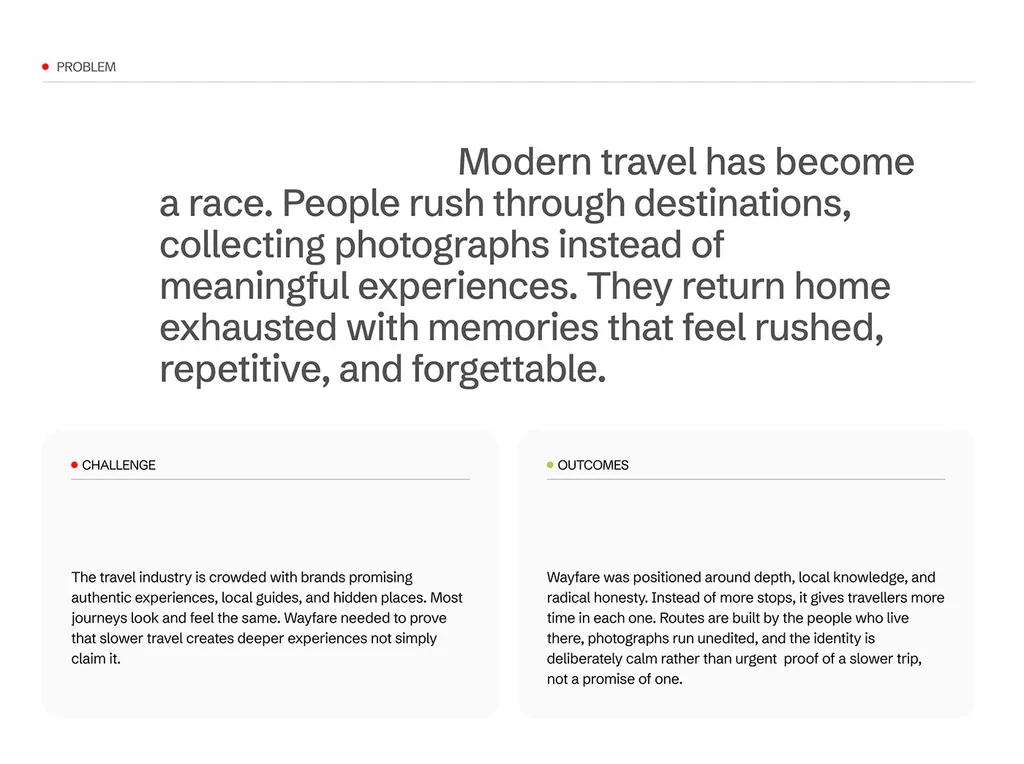
On the Wayfare project, this strategy page came before any design. It states the problem in the traveler’s terms, the challenge in the market’s terms and the position the brand would take. The identity was then built around one line: “Go slow. See more.”
What does a brand strategist deliver?
A brand strategy is a short written document, not a deck of mood images. Whatever title the person has, ask for these deliverables:
- A positioning statement. One or two sentences: who you serve first, what category you compete in, what you do differently and why it’s believable. My guide to writing a positioning statement has a template.
- Audience profiles. Who buys, what they’re trying to get done and what stops them.
- Key messages with proof. Three to five lines your website, deck and sales team all repeat, each with the evidence underneath.
- Brand personality. A few traits that give later design decisions a reason.
- A voice guide. How the brand sounds, with examples.
- A brief for design. What the identity must express, so the designer isn’t guessing.
To see these as one working document, the brand strategy template lays them out with a filled-in example.
Brand strategist vs brand designer
A brand strategist decides what the brand stands for and says; a brand designer turns that into the logo, color, type and visual system. Brand Master Academy describes the strategist as the “brand architect and project director” and the designer as the visual communication specialist (Brand Master Academy). Strategy comes first, then design. A designer can draw a strong logo without a written strategy, but you’ll judge it by taste instead of by whether it fits the position you want to own. That’s why many brand designers, me included, run a strategy phase before any design. If you’re choosing between a solo designer and a studio, see my comparison of a brand designer vs a branding agency. For when to hire a consultant, a strategist or a designer, see brand consultant vs strategist vs designer.
When do you need a brand strategist?
These are the usual signs:
- Your team explains the company differently. Founders, sales and the website each say something slightly different, and prospects notice.
- You’re about to spend on design. A new identity, website or pitch deck is far cheaper to brief well than to redo.
- You’re entering a new market or audience. Moving from consumers to businesses, or from the US to the Gulf, changes who you’re compared with.
- Competitors sound like you. If your homepage headline would fit three competitors, the positioning isn’t finished.
- You’re raising. Investors hear many pitches, and a clear position is easier for them to remember and repeat.
- You’ve changed and the brand hasn’t. A pivot, a merger or a new product line usually needs the strategy reset before any rebrand.
When you probably don’t need one yet: you’re still testing whether anyone wants the product, you have no customers to learn from, or the decision is purely visual (a logo file fix, a new color for a campaign). At that stage, draft a rough positioning statement yourself and revisit it once real sales conversations give you something to learn from.
How to hire a brand strategist: in-house, freelance or agency
| Option | Good fit for | Watch out for |
|---|---|---|
| Full-time in-house strategist | Larger companies with several products or markets | A senior hire for work that happens in bursts |
| Freelance strategist or brand consultant | A defined project, or an outside view | Strategy with no one to turn it into design |
| Branding agency | Multi-market or multi-product work | Price and process built for larger companies |
| Brand designer or studio that includes strategy | Startups and small businesses that need strategy and identity together | How much research is actually included |
How much does a brand strategist cost?
Salaries (full-time). The published numbers disagree, so compare several:
| Source | Figure | What it measures |
|---|---|---|
| Indeed career guide (updated 16 June 2026) | $101,241 a year, average | Indeed salary data for “brand strategist,” refreshed monthly |
| Indeed employer guide (updated 12 May 2026) | $72,384 a year, average | Indeed Salaries, with no date given for the data |
| Celarity | $94,700 (25th percentile), $110,500 average, $126,200 (75th percentile) | US employer-reported salaries |
| LogRocket (August 2024) | $117,000–$218,000 | A Glassdoor range, as reported by the article |
| U.S. Bureau of Labor Statistics (May 2025 data) | $166,790 median | Marketing managers, the nearest occupation BLS reports; brand strategist isn’t listed separately |
The spread is wide because “brand strategist” covers everything from a junior agency role to a senior lead. Don’t budget from one number.
Project fees. The Brand Strategy Lab puts brand strategy projects from US agencies at $5,000 to $40,000. For hourly work, The Branded Agency quotes a 2026 guide that puts established agencies at $100–$300 an hour and freelancers or boutiques at $50–$200 (The Branded Agency). For what the other parts of a brand build cost, see brand development services.
These are the latest published figures, a sound base for a 2027 budget; check the live pages before you set one. For most startups a fixed project is the practical choice: the strategy work happens in a burst, then the team uses it for years.
Questions to ask before you hire a brand strategist
- “What will I have at the end?” You want a written list: positioning, messages with proof, voice and a brief for design.
- “What research is included?” Look for customer conversations, a competitor review and an audit of what you already say. “Workshop only” means the strategy rests on your team’s opinions.
- “Can I see a strategy you wrote, and the design that came from it?” The link between the two shows the strategy was usable.
- “Who turns this into design?” If it’s someone else, budget for them and check they’ll work from the brief.
- “How many rounds of changes, and what’s the timeline?” Get both in writing.
- “What happens if a message can’t be backed up?” In the US, the FTC expects advertisers to have a reasonable basis for claims before they run. A strategist should flag claims you can’t prove.
Questions to ask a brand designer has more for the first call.
How I handle brand strategy
My process for identity work is Discovery → Strategy → Identity → Handover. Strategy always comes before design, whether you buy it on its own or as part of an identity.
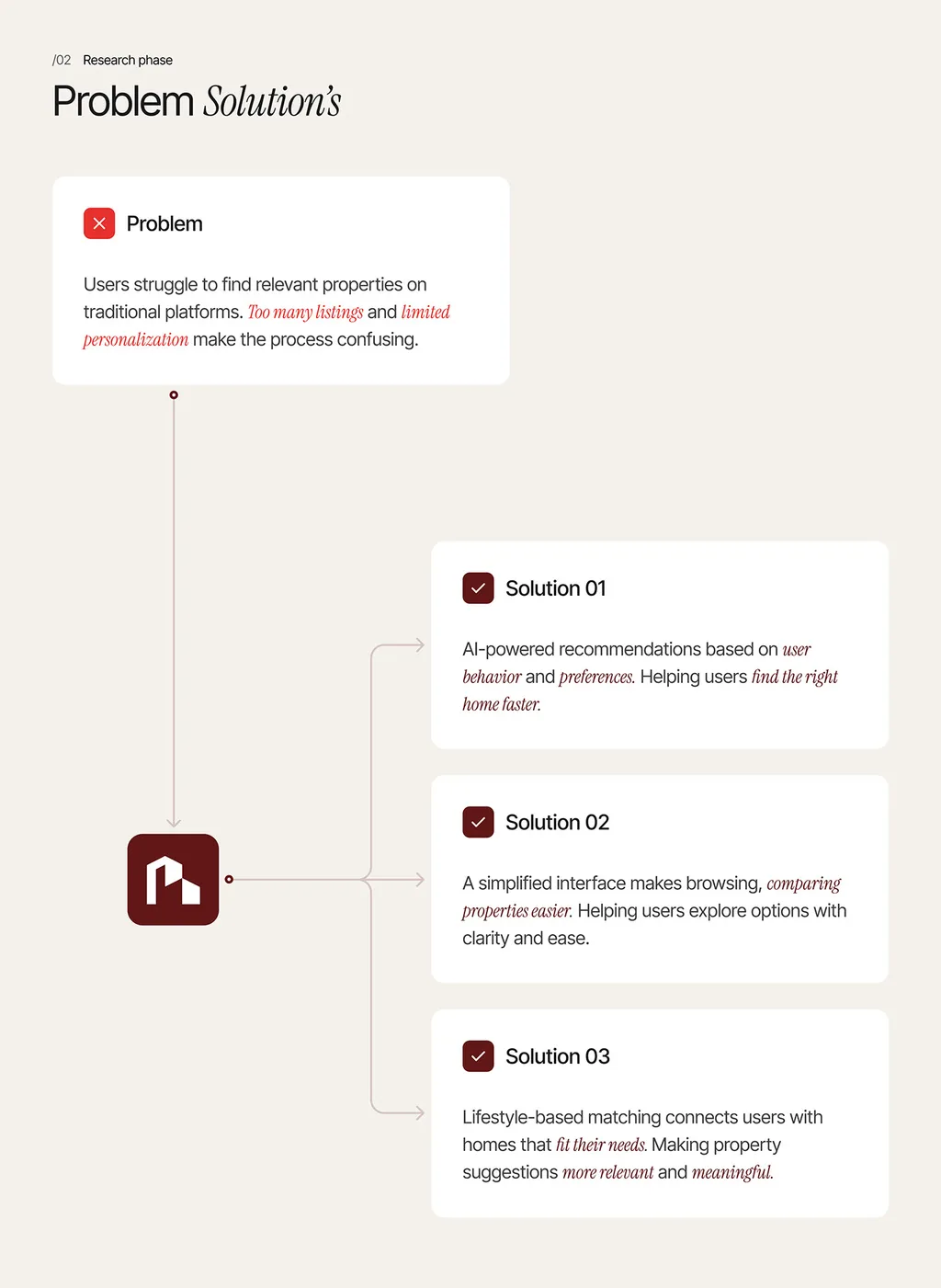
- Standalone brand strategy: a discovery workshop and an audience and competitor review, then positioning, personality, key messages and voice, written up for your team and designers. It takes 2–3 weeks with three revision rounds, at a fixed price set in a written proposal after a free 30-minute call.
- Strategy plus identity: the $3,499 brand identity package includes the Discovery and Strategy phases, four concepts, the visual identity and brand guidelines, with unlimited revisions within the agreed scope, in 2–3 weeks. You don’t need to buy strategy separately.
The standalone project suits founders who already have a designer or an in-house team, or who want the decisions made before they commit to design.
Get your brand strategy right before you design
Book a free 30-minute call in your time zone, and bring your website, your deck and notes from a few recent sales calls. You’ll leave knowing whether you need a standalone strategy, a strategy-led identity or neither yet, with a fixed written proposal if it makes sense. What’s included is on the brand strategy page.
FAQ
What does a brand strategist do?
A brand strategist researches your customers, competitors and current brand, then writes down the decisions the company works from: who you serve first, what you want to be known for, the messages you repeat and how the brand sounds. A designer then turns those decisions into a visual identity.
What’s the difference between a brand strategist and a brand designer?
The strategist decides what the brand stands for and says. The designer decides how it looks: logo, color, type and the visual system. Strategy comes first, and many brand designers and studios run a strategy phase before design.
Is a brand consultant the same as a brand strategist?
Mostly. “Brand consultant” often means a more senior or advisory role that may give recommendations rather than write the full strategy. Ask what you’ll have at the end instead of relying on the title.
How much does a brand strategist earn?
Published US averages range from about $72,000 to $110,000 a year depending on the source, and Glassdoor-based ranges reported for senior roles run higher. The BLS doesn’t report brand strategist as its own occupation; marketing managers had a median of $166,790 in May 2025.
How much does it cost to hire a brand strategist for a project?
The Brand Strategy Lab puts US agency brand strategy projects at $5,000 to $40,000. My standalone brand strategy is a fixed price quoted after a free call, and strategy is included in the $3,499 brand identity package.
Does a startup need a brand strategist?
Not before you have customers to learn from. Once you’re about to spend on an identity, a website or a raise, a short strategy project helps you avoid an expensive redesign. For many startups, a designer who includes a strategy phase covers it.
How long does brand strategy take?
With me, a standalone brand strategy takes 2–3 weeks, with weekly check-ins in your time zone and three revision rounds.
Sources
- U.S. Bureau of Labor Statistics: Advertising, Promotions, and Marketing Managers (May 2025 wages; page modified 27 August 2026)
- U.S. Small Business Administration: Market research and competitive analysis
- FTC: Policy Statement Regarding Advertising Substantiation (1984)
- Indeed: How To Become a Brand Strategist (updated 16 June 2026)
- Indeed: Brand Strategist Job Description (updated 12 May 2026)
- Celarity: Brand Strategist Job Description and salary data
- LogRocket: What does a brand strategist do? (August 2024)
- Baron Sauvage: What the hell is a brand strategist, anyway? (24 September 2024)
- The Brand Strategy Lab: How Much Does a Branding Agency Cost in the US (15 September 2026)
- The Branded Agency: Branding Agency Cost in 2026 (27 October 2026)
- Brand Master Academy: Brand Designer vs Brand Strategist