Personal Branding for Executives Your Comms Team Can Approve
Executive personal branding that fits the company brand: one expertise lane, topic rules comms can approve, LinkedIn, a speaker kit, ghostwriting, AI and measurement.

Summarize with AI
Key takeaways
- An executive’s personal brand is a narrow expertise lane plus three themes, all of which sit beside the company’s strategy, never against it.
- Agree the rules before the first post: which topics are open, which need comms or legal review, and which are off limits. For US public companies, material news goes out through the company’s announced channels first.
- LinkedIn is the main surface for most executives. A complete profile, a banner in the company’s look, one post format and an occasional document carousel cover most of the job.
- Speaking needs its own small kit: a one-sheet, bios in three lengths, portraits in the right crops and a slide template.
- Ghostwriting and AI drafts work when the ideas and the final edit are the executive’s. A written voice guide makes both possible.
- Measure who is reading, profile visits, followers in the right seniority and inbound invitations, not likes.
Executive personal branding, or personal branding for executives, is how a senior leader becomes known for a specific area of expertise, in a way the company is happy to stand behind. In practice it is five things: a positioning sentence and three expertise themes, an agreed approval process with comms and legal, a LinkedIn profile and post templates, a speaking kit, and a voice guide that keeps ghostwritten or AI-drafted posts sounding like the executive. The visual side is usually light: the company’s colors and type, good portraits and a few templates. The hard part is agreeing what the executive talks about, and who signs off.
I’m Masuder Rahaman, a brand designer and the founder of Wolfpixel, where I lead the design team. Personal branding is one of my services. I don’t have a published executive case study, so this article sets out the work itself and, further down, my closest real projects. It is written for two readers: the executive, and the communications or marketing lead who is often the one asking for help.
How an executive brand differs from a founder or coach brand
A founder before a raise needs a credibility check: everything an investor finds should match the deck. I covered that in personal branding for founders, and the basic definition in what a personal brand is. A coach or consultant is the product, so their name is the brand and they own every decision.
An executive is different on three counts:
- The company comes first. Every post is read as a company signal, whether it is meant to be or not.
- Other people have a say. Comms, legal, investor relations and sometimes the CEO.
- The brand has to outlast the job title. The expertise should travel; the company’s confidential plans should not.
So the brief is not “become an influencer.” It is “be known for one area of expertise, in a way that helps the company and still belongs to you.”
Step 1: Pick one expertise lane and three themes
Profiles that cover everything read like a press release. Pick one lane where the executive has real depth, then three themes inside it.
| Role | Expertise lane | Three themes (examples) |
|---|---|---|
| CFO at a scale-up | Finance that supports fast growth | Pricing decisions, board reporting, building a finance team |
| CTO at a software company | Engineering teams that ship reliably | Hiring engineers, technical debt, using AI in the build |
| Chief people officer | Hybrid teams that stay | Onboarding, manager training, pay transparency |
Three tests for the lane:
- Can the executive talk about it for an hour without notes? If not, it is an aspiration, not a lane.
- Does it support the company’s positioning? A CTO talking about reliable engineering helps a company that sells reliability. Talking about crypto trading does not.
- Will it still be true in a different job? Expertise travels. “I run X at Company Y” does not.
Then write the positioning sentence: who the executive helps or informs, on what, and why they are credible. For example: “I write about building finance teams for companies growing faster than their systems, from twelve years in finance roles at software companies.” That sentence goes into the LinkedIn headline or About section, every bio and the speaker one-sheet.
If the company’s own positioning isn’t settled, settle it first. An executive’s themes can’t sit beside a strategy nobody has written down. That is brand strategy work.
Step 2: Align with the company brand before the first post
This step decides whether the program survives its first month. Put three things in writing.
Who owns what
| The executive’s brand | The company’s brand | |
|---|---|---|
| Owns | Expertise, opinions within agreed topics, personal story | Product news, financials, strategy, customer names |
| Channel | Personal LinkedIn profile, talks, podcasts | Company Page, website, press releases, investor channels |
| Look | Portraits, plus company colors and type where they meet | Logo, full identity, guidelines |
| Who approves | The executive, with comms review for agreed topics | Comms, legal, investor relations |
A useful detail for both sides: LinkedIn’s User Agreement says that “as between you and others (including your employer), your account belongs to you.” The profile, and its followers, leave with the executive. That is a good reason for the company to invest in the expertise, not in making the profile a second Company Page.
Green, amber and red topics
A short topic list saves a review for every post.
- Green (post without review): the executive’s three themes, lessons from their own career, comments on public industry news, praise for the team.
- Amber (comms review first): anything about the company’s products, customers, partners, hiring plans or competitors, and opinions on regulation.
- Red (not on a personal profile): financial results before they are announced, deals, layoffs, litigation, anything under NDA.
The exact lists are the company’s call. Comms and legal should write them, and the executive should agree to them.
If the company is listed in the US: Regulation FD
For a US public company, Regulation FD governs how material nonpublic information is shared. In its 2013 report on a Netflix CEO’s Facebook post, the SEC said companies must “alert investors and the market to the channels it will use” for that information, and that “personal social media sites of individuals employed by a public company would not ordinarily be assumed to be channels” through which the company would disclose it.
In plain terms: an executive’s LinkedIn profile is not the place to break material news, unless the company has told investors it is one of its channels. The details are for the company’s securities lawyer and investor relations team, not a designer.
The visual relationship
Most executives don’t need a separate visual identity. They need the company’s colors and type on their banner and slides, and a consistent portrait. A personal wordmark makes sense when the executive also has an independent public life: board seats, a book, a newsletter that predates the job, or a portfolio career. If that is not the case, keep it simple.
Step 3: LinkedIn as the main surface
For most executives, LinkedIn is where customers, candidates, journalists and event organizers look first.
The profile.
- Headline: the positioning sentence, shortened. Role and company, then the lane.
- About: three short paragraphs: the lane, the evidence, what the executive writes and speaks about.
- Featured: one talk, one article or newsletter edition, and one company link.
- Experience: the current role described in the company’s approved wording.
The banner. LinkedIn’s Help Center recommends a cover image of 1584 × 396 pixels, as a JPG or PNG under 8MB. It also notes that photos look better than images with logos, and that how the image appears may change with the size of the browser window and the screen resolution. So design with a calm photo or color field, keep text short and away from the edges, and test it on a phone and a wide screen. Using the company’s colors here is the simplest way to show the two brands belong together.
Posts. One reliable format beats five clever ones: a text post with a short opening line and, sometimes, one image from a post template in the company’s colors.
Document carousels. For deeper pieces, such as a framework, a checklist or a short talk summary, LinkedIn lets members upload documents to a post. It supports PPT, PPTX, DOC, DOCX and PDF files up to 100MB and 300 pages, suggests converting to PDF whenever possible for the highest quality upload, and suggests adding a title. A cover slide, two content layouts and a closing slide, built on the company’s type and colors, cover most needs.
Newsletters. For an executive with a clear lane, a monthly LinkedIn newsletter is a good home for longer thinking. It is also a commitment: start one only if the executive, or a writer working with them, can keep it going.
Step 4: A speaking kit
Event organizers ask for the same things every time, so prepare them once.
- Speaker one-sheet. One page with the portrait, the positioning sentence, two or three talk topics with a one-line description each, past talks, and a contact (often someone in comms).
- Bios in three lengths. About 25 words for a program listing, about 75 for a website, and about 150 for an introduction read on stage. Write them from the positioning sentence, so they all say the same thing.
- Portraits in the right crops. A square for avatars and programs, a wide crop with space beside the face for banners and posters, and a vertical crop for event apps. Shoot from a short brief: background, wardrobe colors that sit with the company palette, light and mood.
- A slide template. A title slide, a section divider, a one-idea slide and a closing slide. Most executives present in the company’s master template; a speaker version adds the executive’s name, portrait and talk title without breaking it. Check the event’s own template rules before you build anything.
Step 5: Ghostwriting or the executive’s own voice
Most executives don’t have time to write every post. The question is how much of the thinking is theirs:
| Model | How it works | When it fits |
|---|---|---|
| The executive writes | Writes and posts; comms reviews amber topics | Executives who enjoy writing |
| The executive talks, a writer shapes | A 20-minute call or voice note a week; a writer turns it into posts | Most busy executives |
| A writer drafts from interviews | A monthly interview feeds a month of drafts; the executive edits each one | A steady cadence, less executive time |
| Fully ghostwritten | A writer chooses topics and writes; the executive approves | Rarely works: it reads like everyone else |
Three rules make any model work:
- The ideas are the executive’s. Opinions, stories and examples come from them. A writer can shape, not invent.
- The executive posts and replies from their own account. LinkedIn’s User Agreement asks members not to “share or transfer your account or any part of it.” Comments and replies are where people judge whether it is really them, so those are best written by the executive.
- The final edit is the executive’s. If they wouldn’t say it out loud at a conference, it doesn’t go out.
I don’t write or post content for clients. What I hand over is the groundwork a writer, or the executive, works from: the positioning, themes, voice and templates.
Step 6: AI-drafted posts need a voice guide
Many teams now draft with ChatGPT, Claude or LinkedIn’s own tools. Without instructions, the drafts sound generic.
An executive voice guide fits on one or two pages:
- Three or four traits, each with an example. “Plain, not casual”: “We missed the target. Here is what we changed.”
- Phrases the executive actually uses, taken from real talks, emails and interviews.
- Phrases they would never use, including the company jargon and buzzwords that make posts sound like marketing.
- The three themes and the topic lanes, so a draft never wanders into amber or red territory unnoticed.
- Two or three approved posts as examples of the voice done right.
Paste the guide into the AI tool as instructions, then edit every draft. LinkedIn’s User Agreement says the same about content generated by its features: “Please review and edit such content before sharing with others.”
If the company already uses AI tools across marketing, the executive’s voice guide can sit inside a wider AI-ready brand system: design tokens, a brand voice for AI, an AI image style guide and a review checklist. I explain who needs one in what an AI-ready brand system is.
Step 7: Measure it sensibly
Likes are the least useful number. LinkedIn’s post analytics show more telling ones: impressions, members reached, profile viewers from the post, followers gained from it, and viewer demographics such as job title, company, industry and seniority. LinkedIn defines impressions as the “number of times your post was shown on LinkedIn” and notes that the numbers are estimates, so they measure exposure, not interest.
A sensible scorecard, reviewed once a quarter:
- Who is reading. Are viewers in the seniority, industries and companies the executive wants to reach?
- Profile viewers and followers gained from posts. Signs that a post made someone want to know more.
- Invitations. Speaking slots, podcast requests, journalist calls and advisory approaches, logged by hand.
- Business mentions. Candidates or customers who mention the executive’s posts in interviews or sales calls. Ask the recruiting and sales teams to note them.
- Consistency. Did the planned cadence happen?
Judge the program after two quarters, then adjust the themes, not the logo.
In-house, an agency or a designer?
| Option | What you get | Fits when |
|---|---|---|
| Do it in-house (staff time) | Whatever the executive and comms team build; visual quality varies | The executive writes well and comms has time |
| An executive branding or PR agency (ongoing retainer) | Strategy, writing, posting, media and speaking outreach; design is often secondary | You want writing and outreach handled |
| A brand designer (one fixed project) | Positioning, voice, a visual system and templates, with design as the focus; ongoing writing and posting not included | You need the foundation set properly, then run it in-house or with a writer |
A sensible order: set the foundation once, then run the weekly writing in-house or with a ghostwriter. If you are weighing a single designer against an agency more broadly, I compare them in brand designer or branding agency.
Closest work: voice and portraits in a company brand
I have no executive personal branding project to show. These two are company brands, the closest real work to two parts of this article.
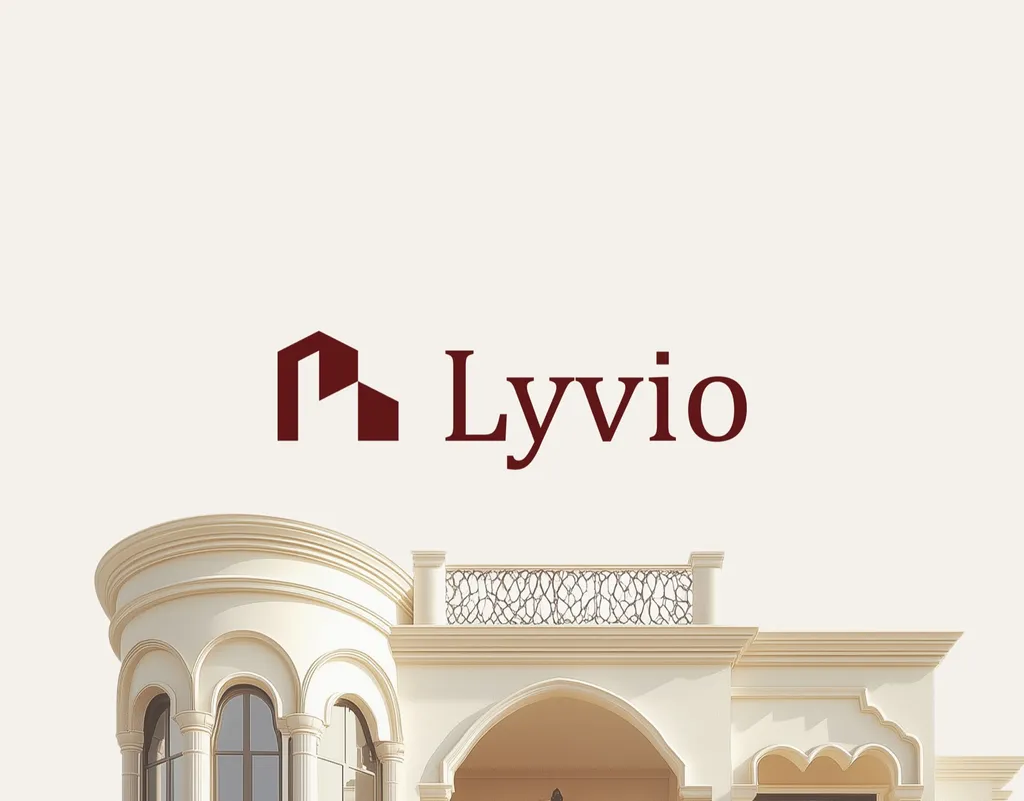
Lyvio: strategy and voice. For Lyvio, an AI property platform for the Middle East market, the brand work included the strategy and a written voice. The voice is “calm, confident and personal,” and its line is “Don’t search for a home. Tell us how you live.” Writing a voice down as traits and real lines, then using it across the app, website and social, is the same discipline an executive voice guide needs.
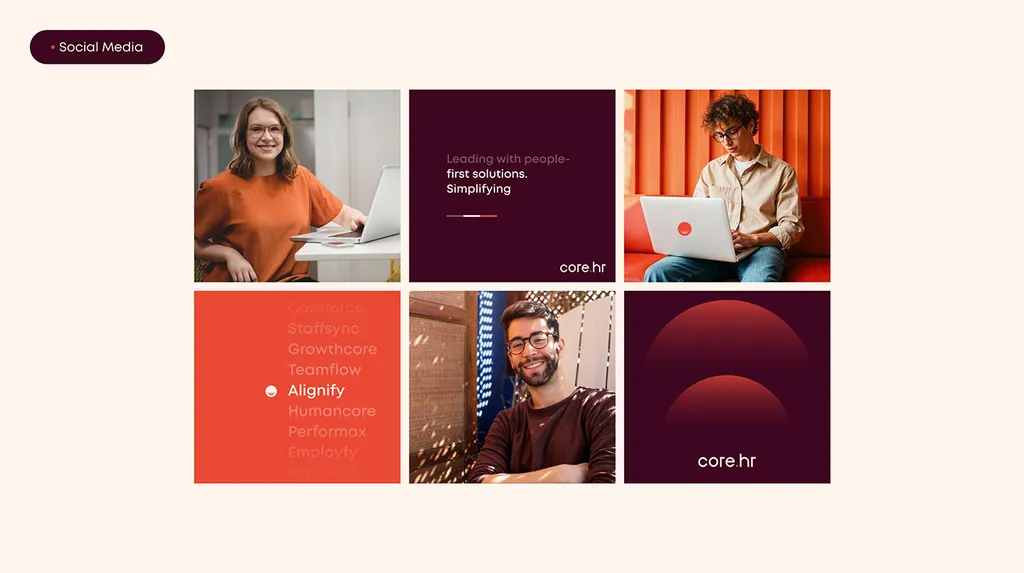
Core.hr: portraits and events in the company look. For the Core.hr rebrand, the social templates use employee portraits with the brand’s red tiles, and the brand carries through to event stages. That is the overlap with an executive’s world: people shown in the company’s visual system, on social and on stage.

Common mistakes in executive personal branding
- Covering every topic. Nobody remembers what the executive is about.
- No topic list. Every post becomes a negotiation with comms, and the program stalls.
- A profile that reads like the Company Page. People follow people for their thinking, not for reposted announcements.
- Ghostwriting that invents. Stories the executive never lived show in the comments.
- AI drafts posted unedited. They sound like everyone else using the same tool.
- A different, old portrait on every platform. Use one recent portrait, in the right crops.
- Judging by likes in month one. Look at who is reading, over two quarters.
Checklist: an executive brand ready to launch
- One expertise lane and three themes, checked against the company’s positioning
- A positioning sentence, used in the headline, bios and one-sheet
- Green, amber and red topic lists, agreed with comms and legal
- For US public companies: Regulation FD questions answered by counsel
- LinkedIn headline, About, Featured and Experience updated
- A banner at 1584 × 396 in the company’s colors, tested on a phone and a desktop
- One post template and one document-carousel template
- A speaker one-sheet, three bios, portraits in three crops and a slide template
- A voice guide, ready for AI tools and a writer
- A ghostwriting model chosen; the executive posts and replies personally
- A quarterly scorecard
How I work with executives and comms teams
A personal branding project takes 2–3 weeks, in four steps:
- Discovery: a call in your time zone about the executive’s work, goals, audience and the company’s rules. The comms lead is welcome on it.
- Strategy: positioning and audience, a one-line positioning statement with key messages for the LinkedIn profile, deck and website, and a voice: traits, phrases that sound like the executive and ones they would never say.
- Identity: color, type and photo direction with a portrait brief your photographer can shoot from, a personal wordmark or monogram if it makes sense, a LinkedIn banner, post templates and a slide deck template. Three revision rounds, with weekly check-ins.
- Handover: a short guide in PDF and a Figma library with every template and source file. You own all the final files.
Ghostwriting and posting are not included, and neither are a website build, ad campaign production or trademark filing. A speaker one-sheet, bios or a newsletter header are not standard parts of the service; we can discuss them on the call and agree them in the proposal. I sign an NDA when a client asks, which often matters at this level. For executives in the UAE and Saudi Arabia, the work can be in Arabic and English.
Personal branding is quoted after a free 30-minute call, as a fixed written proposal, so the price doesn’t change mid-project. The fixed-price logo, brand identity and Premium packages are on the pricing page.
If you are planning an executive’s profile, a talk season or a newsletter, book a free 30-minute call and bring the executive’s LinkedIn profile, the company’s brand guidelines, any topic rules comms already has, and the next talk or launch on the calendar. I’ll tell you what your team can do in-house and whether a designed system is worth it.
FAQ
What is executive personal branding?
It is how a senior leader becomes known for a specific area of expertise in a way the company supports. It usually covers a positioning sentence and three themes, an approval process with comms and legal, a LinkedIn profile and templates, a speaking kit and a voice guide for writers and AI tools.
Should an executive’s personal brand match the company brand?
Where they meet, yes. Use the company’s colors and type on the banner and slides, keep the executive’s themes beside the company’s strategy, and agree which topics need review. The executive’s opinions and expertise remain their own, and LinkedIn’s User Agreement says the account belongs to them, not the employer.
Is it acceptable for executives to use a ghostwriter on LinkedIn?
Many do. It works when the ideas, stories and final edit come from the executive, and when they post and reply from their own account. Fully ghostwritten posts on topics the executive didn’t choose tend to read like everyone else’s.
Can executives use AI to write LinkedIn posts?
Yes, as a drafting tool. Give the tool a written voice guide and the topic rules, then edit every draft. LinkedIn’s User Agreement asks members to review and edit content its AI features generate before sharing it.
What can a public company executive post on LinkedIn?
Their expertise, career lessons and comment on public news are usually fine. For US public companies, material nonpublic information should go through the channels the company has announced to investors. The SEC has said an employee’s personal social media would not ordinarily be assumed to be such a channel. Check specifics with the company’s lawyers.
How long does an executive personal brand take?
A personal branding project with positioning, voice, visual direction and templates takes 2 to 3 weeks, with three revision rounds. Results on LinkedIn take longer: judge them over two quarters.
Sources
- SEC: Report of Investigation Pursuant to Section 21(a), Netflix, Inc., and Reed Hastings (Release No. 69279, April 2, 2013)
- LinkedIn User Agreement
- LinkedIn Help: Add or change the cover image on your profile
- LinkedIn Help: Upload and share documents on LinkedIn
- LinkedIn Help: Post analytics for your content